Self-Guided Moose Hunt in Alaska: A Comprehensive Plan
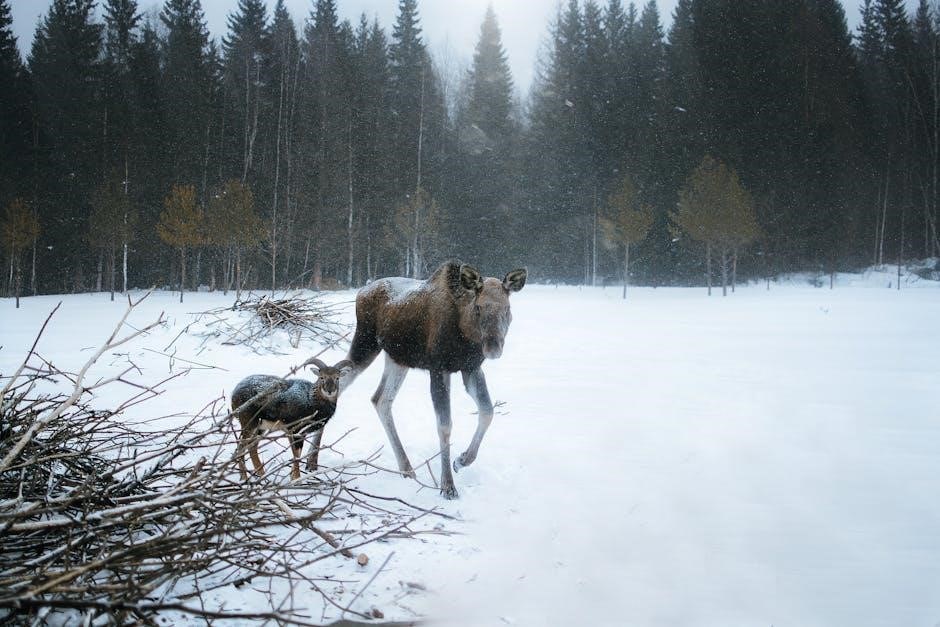
Planning a self-guided moose hunt in Alaska demands meticulous preparation, understanding regulations, and respecting the wilderness; success hinges on diligent research and adherence to guidelines.
Alaska represents the pinnacle of moose hunting destinations, drawing adventurers globally with its expansive, untamed landscapes and abundant wildlife. Often called “The Last Frontier,” Alaska offers a truly immersive hunting experience, distinct from lower 48 states due to its remoteness and challenging terrain. For non-resident hunters, the allure lies in the opportunity to pursue the largest subspecies of moose – the Alaska-Yukon moose – renowned for its impressive antler size and substantial body weight.
However, hunting in Alaska isn’t simply about the pursuit; it’s about responsible wildlife management and respecting the environment. Non-residents face specific regulations and requirements designed to ensure sustainable moose populations and a fair chase. A successful hunt necessitates thorough preparation, including understanding these regulations, acquiring the necessary permits, and possessing the skills to navigate and survive in the Alaskan wilderness. The state’s commitment to conservation makes it a premier, yet demanding, hunting location.
The Allure of Alaska for Non-Resident Hunters
Alaska’s appeal for non-resident hunters stems from its vast, pristine wilderness and the promise of a trophy moose hunt unlike any other. The state’s sheer size – over 665,000 square miles – provides ample opportunity for a truly remote and solitary hunting experience. Unlike many other hunting destinations, Alaska offers a genuine sense of adventure and self-reliance, particularly for those undertaking a self-guided hunt.
The potential to harvest a magnificent Alaska-Yukon moose, boasting impressive antlers, is a significant draw. However, the challenge is equally appealing. Non-residents are attracted by the need for meticulous planning, physical endurance, and a deep understanding of moose behavior and habitat. Successfully navigating Alaska’s regulations and terrain adds to the sense of accomplishment. It’s a destination that rewards preparation and respect for the wild, offering an unforgettable hunting experience.
Understanding Alaska’s Game Management Units (GMUs)
Alaska is divided into 26 Game Management Units (GMUs), each with unique moose populations, habitat characteristics, and hunting regulations. Comprehending these GMUs is crucial for a successful self-guided moose hunt. Regulations regarding season dates, bag limits, and permissible hunting methods can vary significantly between units. Some GMUs may restrict the use of ATVs or snowmachines, impacting transportation strategies.
Moose density and size can also differ considerably. Researching historical harvest data and recent survey results for specific GMUs is essential. The Alaska Department of Fish and Game (ADF&G) provides detailed information on each unit, including maps, regulations, and population estimates. Selecting a GMU that aligns with your experience level, physical capabilities, and preferred hunting style is paramount for a rewarding and ethical hunt.
Moose Distribution and Habitat in Alaska
Moose in Alaska exhibit diverse distribution patterns, influenced by habitat availability and seasonal changes. They thrive in boreal forests, characterized by spruce, birch, and willow, alongside riparian areas and alpine meadows. Understanding these preferences is vital for a self-guided hunt. Moose often congregate near water sources, especially during warmer months, and browse on aquatic vegetation.
During the fall hunting season, moose may begin to migrate to lower elevations seeking shelter from early snows. Knowledge of these movement patterns can significantly improve your chances of success. The Alaska Department of Fish and Game provides habitat maps and distribution data. Recognizing signs of moose presence – tracks, rubs, and droppings – is crucial for locating animals within their preferred habitats, maximizing your hunting efficiency.
Planning Your Self-Guided Moose Hunt
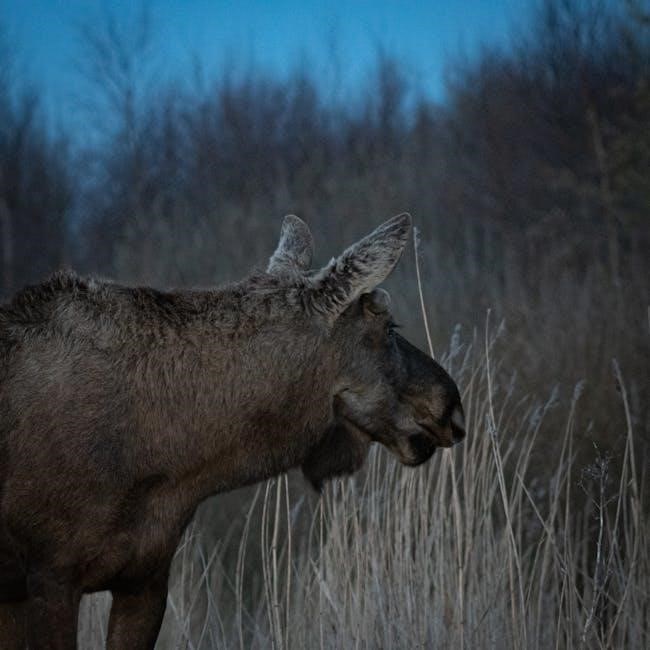
Successful self-guided moose hunts require securing a tag, completing orientation, understanding Alaska’s hunting regulations, and arranging reliable transportation for remote wilderness access.
Obtaining a Non-Resident Moose Tag
Securing a non-resident moose tag in Alaska is a crucial first step, often involving a draw process managed by the Alaska Department of Fish and Game (ADF&G). Applications typically open in November, with deadlines varying, so early research is vital. Hunters must designate specific game management units (GMUs) when applying, understanding draw odds fluctuate significantly between units.
The application process requires detailed information, including hunting experience and a valid hunting license. Be prepared for application fees, and understand that drawing a tag doesn’t guarantee a hunt; it grants the opportunity to hunt within specified regulations. Non-residents should explore options like registering with an Alaskan hunting guide service, even for a self-guided hunt, as some guides can assist with the application process and provide valuable pre-hunt information. Successful applicants will then need to purchase their tag before the season begins.
Required Hunter Orientation and Training
Alaska now mandates that all non-resident moose hunters complete a specific orientation before participating in a hunt. This requirement, implemented by the Alaska Department of Fish and Game (ADF&G), focuses on crucial skills: proper field care of big game and accurate antler identification. Hunters must view the “Is This Moose Legal?” video and the “Field Care of Big Game” video, available on the ADF&G website or at regional offices.
Successful completion of this orientation is not optional; it’s a prerequisite for legally hunting moose as a non-resident. The orientation ensures hunters understand ethical harvest practices, minimize meat spoilage, and can correctly identify legal antlers, contributing to sustainable wildlife management. Proof of completion is often required when purchasing a moose tag or during check-in procedures, so retain documentation. This training is vital for a responsible and successful hunt.
Alaska Hunting Regulations for Non-Residents
Non-resident hunters in Alaska face a unique set of regulations designed to manage wildlife populations and ensure fair chase. Obtaining a moose tag is the first step, requiring application through the ADF&G drawing process, often with separate drawings for different game management units (GMUs). Hunters must possess a valid Alaska hunting license and demonstrate proof of hunter education.
Specific regulations vary significantly by GMU, dictating season dates, bag limits, and permissible hunting methods. Non-residents must be aware of restrictions regarding the use of motorized vehicles like ATVs and snowmachines, which are often limited to specific areas or conditions. Thoroughly reviewing the ADF&G’s hunting regulations booklet, available online or at ADF&G offices, is crucial. Ignorance of the law is not a valid defense, and violations can result in fines and loss of hunting privileges.
Season Dates and Hunt Timing
Moose hunting season dates in Alaska are meticulously set by the Alaska Department of Fish and Game (ADF&G) and vary considerably depending on the Game Management Unit (GMU). Generally, for non-residents, the moose hunting season typically runs from early September through late September, though specific dates can shift annually. Checking the ADF&G’s hunting regulations booklet for the current year is absolutely essential.
Hunt timing is critical; early September often coincides with the rut, increasing moose activity and vocalizations, making calling more effective. However, warmer temperatures can impact meat preservation. Later in September, moose begin to group for winter, potentially offering opportunities for observing larger numbers, but also becoming more cautious. Careful consideration of weather patterns and moose behavior is vital for maximizing success.
Transportation Options for a Self-Guided Hunt

Alaska’s vastness necessitates careful planning for transportation during a self-guided moose hunt. Options range from bush planes to 4×4 vehicles, ATVs, and even snowmachines, depending on the GMU and terrain. Bush planes offer access to remote areas, but are expensive and weather-dependent. 4×4 trucks are suitable for established roads and trails, but may be limited in rugged terrain.
Non-residents must be aware of strict regulations regarding ATV and snowmachine use. Some GMUs restrict their use to frozen ground or designated trails. Utilizing these vehicles illegally can result in hefty fines and confiscation. Floatplanes and boats are viable options for accessing river drainages. Thoroughly research transportation regulations for your chosen GMU before your hunt, and always prioritize safety and responsible travel.
ATV and Snowmachine Regulations for Non-Residents
Alaska imposes specific regulations on non-resident hunters utilizing ATVs and snowmachines for moose hunting. These rules vary significantly by Game Management Unit (GMU), demanding thorough pre-hunt research. Generally, non-residents are often restricted to using these machines on frozen ground to minimize environmental impact and disturbance to wildlife.
Many GMUs prohibit off-trail travel with ATVs or snowmachines, limiting access to designated trails or established routes. Operating these vehicles illegally can lead to substantial fines, equipment confiscation, and even hunting license revocation. Hunters must consult the Alaska Department of Fish and Game (ADF&G) regulations booklet for their specific GMU to understand permissible use. Prioritize compliance and responsible machine operation to ensure a legal and ethical hunt.
Essential Gear and Equipment
Successful Alaska moose hunts require robust firearms, reliable navigation tools, comprehensive field dressing kits, and appropriate clothing for challenging, unpredictable weather conditions.
Firearms and Ammunition Choices
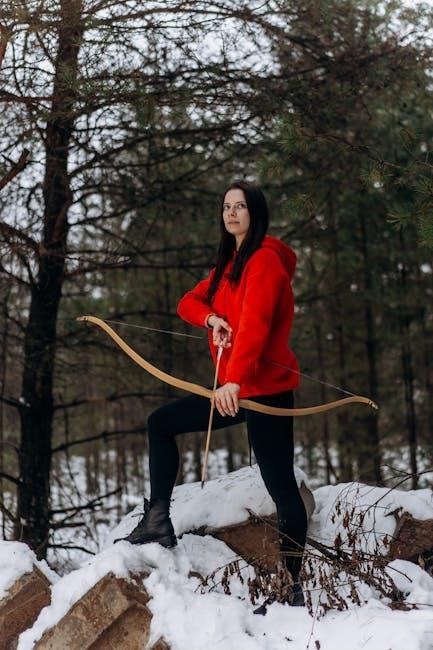
Selecting the right firearm for an Alaskan moose hunt is paramount, demanding careful consideration of caliber, range, and stopping power. Generally, rifles chambered in .300 Winchester Magnum, .338 Winchester Magnum, or .375 H&H Magnum are popular choices, offering a balance of accuracy and energy delivery. However, larger calibers like .375 Ruger or even .458 Winchester Magnum can be beneficial for longer shots or exceptionally large moose.
Ammunition selection is equally crucial. Premium bonded or expanding bullets in the 180-250 grain range are recommended to ensure deep penetration and reliable expansion, even through thick brush and bone. Practice extensively with your chosen rifle and ammunition to achieve proficiency and understand its ballistic characteristics. Remember that ethical hunting demands a clean, quick kill, and proper shot placement is vital, regardless of the firearm used. Always verify that your chosen firearm and ammunition comply with all Alaskan hunting regulations.
Navigation and Communication Tools

Navigating Alaska’s vast wilderness requires reliable tools. A high-quality GPS unit with pre-loaded topographic maps is essential, alongside a compass and the ability to use them effectively. Don’t solely rely on electronic devices; batteries can fail, and technology can malfunction. Physical maps are crucial backups. Satellite communication is vital for safety, as cell service is often nonexistent.
Consider a satellite phone or a personal locator beacon (PLB) for emergencies. These devices allow you to contact help even when out of cell range. Two-way satellite communicators, like Garmin inReach devices, offer messaging capabilities and SOS functionality. Inform someone of your hunting plans, including your route and expected return date. Regularly check in with them using your satellite communication device. Practice using all navigation and communication tools before your hunt.
Field Dressing and Meat Care Equipment
Proper field dressing and meat care are paramount in Alaska’s environment to prevent spoilage. Essential equipment includes a sharp, high-quality game knife, bone saw, and sharpening stone. Heavy-duty game bags are crucial for protecting the meat from insects and dirt during transport. Bring ample amounts of rope or paracord for hanging meat.
Cooling the meat quickly is vital. Consider bringing a portable electric cooler if vehicle access allows. Otherwise, utilize natural cooling methods like shade and airflow. A meat thermometer is essential for verifying internal temperatures. Pack plenty of clean water for washing and cleaning. Familiarize yourself with proper field dressing techniques before your hunt, including the new orientation requirements regarding meat care.
Clothing and Personal Protective Equipment
Alaskan weather is unpredictable; layering is key. Pack waterproof and breathable outer layers, including a jacket and pants. Insulating layers like fleece or wool are essential for warmth. Bring multiple pairs of moisture-wicking base layers. Sturdy, waterproof hunting boots are non-negotiable, alongside warm socks.
Personal protective equipment is vital. Include a hunter orange hat and vest for visibility. Insect repellent is crucial, especially during warmer months. Don’t forget gloves, a warm hat, and sunglasses. A first-aid kit, including bear spray, is mandatory. Consider gaiters for navigating brushy terrain. Prioritize durable, comfortable clothing suitable for demanding conditions and potential emergencies.
Hunt Strategies and Techniques
Successful moose hunting relies on mastering calling, spotting, and stalking techniques, alongside diligent field care to preserve harvested meat in Alaska’s vast terrain.
Moose Calling Techniques
Moose calling is a crucial skill for a self-guided Alaskan hunt, often bringing bulls within range. Understanding moose vocalizations is key; utilize calls mimicking cow moans, grunts, and thrashing branches to attract attention. Begin with soft, subtle calls, gradually increasing volume and frequency based on response.
Different calls serve various purposes – cow calls attract bulls during the rut, while grunt calls signal dominance or challenge. Practice using a variety of calls and observe moose behavior to refine your technique. Wind direction is paramount; ensure your scent doesn’t reach the moose before the sound;
Consider using a birch bark call for authentic sound, or commercially available diaphragm and reed calls. Patience is vital; moose may not respond immediately. Be prepared to relocate if calls yield no results, and always prioritize safety while calling in a potentially dangerous animal.
Spotting and Stalking Strategies
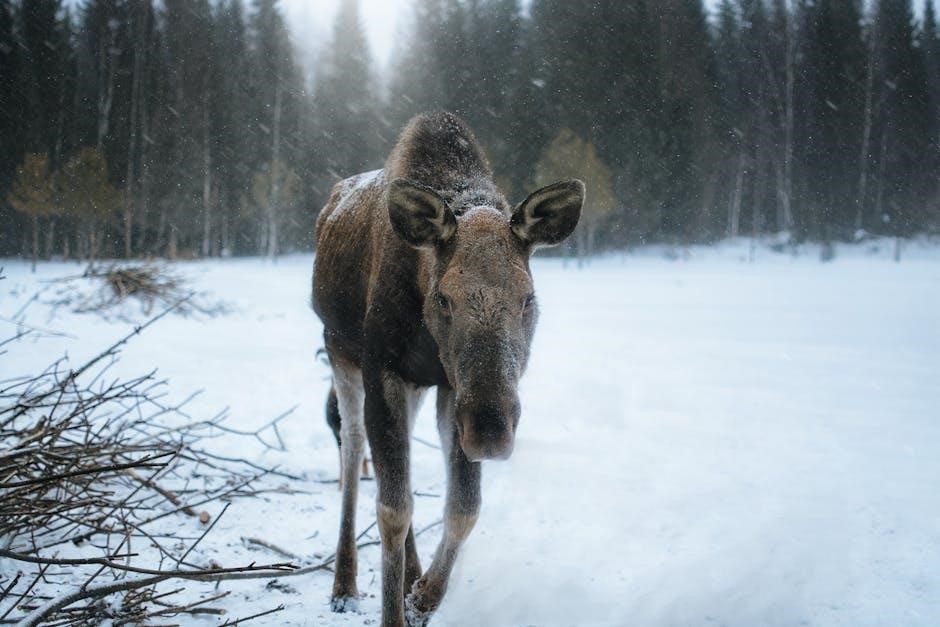
Spotting moose in Alaska’s vast terrain requires patience and keen observation. Utilize binoculars and spotting scopes to scan open areas like meadows, river bottoms, and along forest edges, especially during dawn and dusk. Look for movement, dark shapes against the landscape, and signs of feeding.
Once spotted, stalking demands careful planning and execution. Assess wind direction – always approach upwind to avoid detection. Utilize natural cover like trees and brush for concealment, moving slowly and deliberately. Break up your silhouette and minimize noise.
Stalking often involves navigating challenging terrain; be prepared for uneven ground and dense vegetation. Rangefinding is crucial for accurate shot placement. Remember, a successful stalk prioritizes stealth and patience, often requiring lengthy approaches and careful positioning before presenting a clean shot opportunity.
Field Care of Harvested Moose
Proper field care is paramount for preserving the quality of your harvested moose. Immediately after the harvest, prioritize cooling the carcass to prevent spoilage. Begin by removing the skin, starting with the hindquarters, and exposing the meat to air circulation.

Elevate the quarters off the ground using branches or rocks to facilitate airflow. Remove all fat and connective tissue, as these accelerate spoilage. Quartering the moose allows for easier transport and cooling. Utilize game bags to protect the meat from insects and debris.
Maintaining a cool, dry environment is critical. If temperatures are warm, consider using ice or snow to cool the meat. Prompt and thorough field care ensures a delicious and safe harvest, respecting the animal and maximizing your reward.
Post-Hunt Requirements and Considerations
Following a successful Alaska moose hunt, hunters must report their harvest and adhere to shipping regulations for trophies and meat, ensuring legal compliance.
Reporting Your Harvest
Prompt and accurate harvest reporting is a crucial post-hunt responsibility for all Alaska hunters, especially non-residents undertaking a self-guided moose hunt. The Alaska Department of Fish and Game (ADF&G) mandates that all harvested moose be reported within five days of the kill.
This reporting can be conveniently completed online through the ADF&G website, or via telephone. The reporting process requires detailed information, including the GMU (Game Management Unit) where the moose was taken, the date of harvest, sex and age of the animal (if known), and a description of the harvest location.
Accurate reporting contributes significantly to ADF&G’s ongoing wildlife management efforts, providing valuable data for population assessments and future hunting regulation adjustments. Failure to report a harvest can result in penalties, including fines and potential hunting privileges suspension. Maintaining ethical hunting practices includes fulfilling this essential reporting obligation.
Shipping Your Trophy and Meat
Successfully harvesting a moose during a self-guided Alaska hunt often leads to the desire to preserve a trophy and utilize the valuable meat. Shipping both requires careful planning and adherence to strict regulations. For trophies, engaging a licensed taxidermist familiar with Alaska’s export requirements is essential. They will handle proper documentation and ensure compliance with international shipping laws.
Shipping moose meat demands meticulous care to prevent spoilage. It must be properly frozen and packaged according to USDA guidelines. Commercial freight services specializing in wildlife transport are recommended, as they understand the necessary permits and handling procedures.
Non-residents should be aware of potential costs, including processing fees, shipping charges, and customs duties. Thorough research and advance booking with reputable shipping companies are crucial for a smooth and legally compliant transport of your hard-earned harvest.