Amana Washer Troubleshooting Manual: A Comprehensive Guide
This comprehensive guide provides solutions for common Amana washer issues, covering error codes, operational problems, water leaks, noise, and detergent concerns.
It’s designed to help you quickly diagnose and resolve problems, potentially avoiding expensive service calls and keeping your laundry routine on track.
Effective laundry solutions are within reach with this detailed manual, offering insights into troubleshooting, component replacement, and safety precautions for your Amana washing machine.
Amana washing machines, while known for their dependability, aren’t immune to experiencing operational difficulties. Common problems range from simple issues like a washer that won’t start, to more complex scenarios involving draining problems or unusual noises during operation. Understanding these potential issues is the first step towards effective troubleshooting.
Many Amana washer problems stem from everyday wear and tear, incorrect detergent usage (particularly non-HE detergents causing excessive suds), or obstructions within the drain system. Error codes, such as ‘SD’ for excessive suds or ‘9e1’ for a long drain time, provide valuable clues for pinpointing the source of the problem.
This section will lay the groundwork for understanding the typical malfunctions encountered with Amana washers, preparing you to systematically diagnose and address these issues, ultimately restoring your machine to optimal performance. Remember, preventative maintenance can often avoid these issues!
Understanding Common Error Codes
Amana washers utilize error codes to signal specific malfunctions, simplifying the diagnostic process. Recognizing these codes is crucial for targeted troubleshooting. The ‘SD’ error indicates excessive suds, often caused by using non-HE detergent or an overabundance of detergent, leading to operational disruptions and potential leaks.
The ‘9e1’ code signifies a prolonged drain time, frequently stemming from a clogged drain pump or obstruction within the drain hose. Another common code, ‘OB’, signals an unbalanced load, causing excessive vibration and potentially damaging the machine. Identifying these codes early allows for prompt intervention.
While not exhaustive, understanding these primary error codes – SD, 9e1, and OB – provides a solid foundation for addressing common Amana washer issues. Always consult your washer’s specific manual for a complete list and detailed explanations of all potential error codes.
Troubleshooting Washer Operation Problems
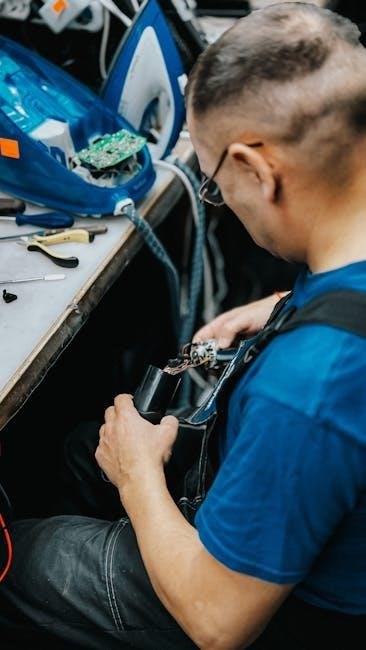
Common issues include the washer failing to start, agitate, spin, or becoming stuck during a cycle; these operational problems require systematic diagnosis and repair attempts.
Washer Won’t Start
If your Amana washer refuses to start, begin with the simplest checks. Ensure the power cord is securely plugged into a functioning outlet. Test the outlet with another appliance to confirm it’s receiving power. Next, verify the lid switch is engaging correctly; the washer won’t start if it doesn’t detect a closed lid.
A faulty lid switch is a frequent culprit. You can often visually inspect it for damage or test it with a multimeter for continuity. If the switch is defective, replacement is necessary. Also, check the control panel for any error codes displayed, as these can provide clues about the underlying issue; Finally, consider the thermal fuse; if it’s blown, the washer won’t receive power to the motor. Locate and test the thermal fuse for continuity – replacement is required if it’s open.
Washer Won’t Agitate
When your Amana washer fills with water but doesn’t agitate, several components could be at fault. First, ensure you haven’t overloaded the washer; an unbalanced load can prevent agitation. Check the drive belt for proper tension and condition – a worn or broken belt will halt agitation. Inspect the motor coupling, a common failure point, for cracks or breakage; this part connects the motor to the transmission.
A malfunctioning motor or transmission can also cause this issue. While more complex to diagnose, listen for humming sounds indicating the motor is receiving power but unable to turn. If the motor seems unresponsive, further testing may be needed. Finally, verify the timer or electronic control board is sending the correct signals to initiate agitation – a faulty control board could be the root cause.
Washer Won’t Spin
If your Amana washer completes the wash cycle but fails to spin, the issue often lies with the drain system or the drive components. First, confirm the washer is fully draining; a partially clogged drain pump or hose can prevent the spin cycle from initiating. Check the lid switch assembly – a faulty switch won’t allow the washer to spin for safety reasons. Ensure the lid is properly closed and the switch is engaging correctly.
A worn or broken drive belt, or a malfunctioning motor coupling, can also be culprits. Inspect these parts for damage. In more complex cases, a failing motor or transmission could be responsible. Listen for any unusual noises during the spin attempt, which might indicate a motor issue.
Washer Stuck on Wash Cycle
When your Amana washer remains indefinitely on the wash cycle, several factors could be at play. A common cause is a problem with the timer or electronic control board, preventing the progression to the next stage. Often, excessive suds can mimic this issue, tricking the washer into thinking it’s still washing – ensure you’re using High Efficiency (HE) detergent and the correct amount.
A malfunctioning lid switch can also halt the cycle. If the switch doesn’t register the lid as closed, the washer won’t advance. Inspect the drain hose for kinks or clogs, as a blocked drain can prevent the cycle from moving forward. Finally, a faulty water inlet valve, particularly if only sprinkling cold water, can cause the washer to pause;
Addressing Water-Related Issues
This section details solutions for common water problems in your Amana washer, including drainage issues, inlet valve malfunctions, leaks, and unusually long drain times.
Washer Won’t Drain
If your Amana washer isn’t draining, several factors could be at play. Begin by checking for obstructions in the drain hose – kinks, bends, or foreign objects can impede water flow. Disconnect the hose from both the washer and the drainpipe, and inspect it thoroughly.
Next, examine the drain pump itself. It may be clogged with lint, small items (like socks!), or debris. Accessing the pump usually involves removing an access panel on the washer’s front or back. Carefully clean the pump filter and impeller.
A faulty drain pump could also be the culprit, requiring replacement. Finally, consider a potential issue with the washer’s control board, though this is less common. Remember to always disconnect power before performing any internal inspections or repairs. A long drain time (indicated by a 9e1 fault) often points to a similar obstruction or pump issue.
Long Drain Time (9e1 Fault)
The 9e1 fault code on your Amana washer signals an extended drain time, indicating the washer is taking too long to pump out the water. This frequently stems from a partial or complete blockage within the drain system. Start by inspecting the drain hose for kinks, twists, or obstructions, disconnecting it at both ends for a thorough check.
Focus on the drain pump itself. Lint, small articles of clothing, or other debris can accumulate, hindering its performance. Access the pump (usually via an access panel) and carefully clean the filter and impeller. A failing drain pump may also cause this issue, necessitating replacement.
Excessive suds, often from using non-HE detergent or too much detergent, can also contribute to a slow drain. Run a rinse cycle with no detergent to eliminate any lingering suds. If the problem persists, professional diagnosis may be required.
Water Inlet Issues ⎯ Cold Water Sprinkling
Experiencing only a sprinkling of cold water during your wash cycle often points to a faulty cold water inlet valve. This valve controls the flow of water into the washer, and a malfunctioning one can restrict the water supply, resulting in a weak stream or sputtering. A simple fix, often costing around $25, involves replacing the inlet valve.
Before replacing the valve, check the water supply hoses for kinks or blockages. Ensure both hot and cold water supply valves are fully open. If the issue persists after verifying the hoses, the inlet valve is likely the culprit. Disconnect the power and water supply before proceeding with the replacement.
Replacing the valve is a relatively straightforward DIY task, but if you’re uncomfortable working with plumbing or electrical components, consult a qualified technician.
Washer Leaking
A leaking Amana washer can stem from several sources, ranging from loose connections to damaged components. Often, excessive sudsing – indicated by the ‘SD’ fault code – contributes to leaks, as the overflowing suds escape the washer’s confines. Addressing sudsing issues with HE detergent is crucial.
Inspect the water inlet hoses and drain hose for cracks, loose clamps, or improper connections. Check the door boot (if applicable) for tears or damage. A worn-out tub seal or a faulty water pump can also cause leaks, requiring professional attention.
Before investigating, ensure the washer is unplugged. Carefully examine the area around the washer to pinpoint the leak’s origin. Tightening connections or replacing damaged hoses are often simple fixes, but internal component failures necessitate a technician’s expertise.
Dealing with Noise and Vibration
Excessive noise and vibration during operation often indicate an unbalanced load, worn bearings, or foreign objects lodged within the washer’s components.
Troubleshooting involves checking for proper leveling, redistributing the load, and inspecting for obstructions.
Amana Washer Making Loud Noise
Identifying the source of a loud noise is crucial for effective repair. Common culprits include foreign objects – coins, buttons, or small items – trapped between the inner and outer tubs. Carefully inspect the drum and around the agitator for any visible obstructions. A failing pump or motor can also generate significant noise, often a grinding or humming sound.
Worn bearings are another frequent cause, producing a rumbling or roaring noise, especially during the spin cycle. To check, manually rotate the drum; any roughness or grinding suggests bearing wear. A malfunctioning drive belt can also create a squealing or slapping sound. Safety first: always disconnect power before attempting any internal inspection or repair. If you’re uncomfortable disassembling the washer, consult a qualified technician.
Remember to check for loose components as well.
Excessive Vibration During Operation
Significant vibration during a wash or spin cycle often indicates an unbalanced load. Pause the washer and redistribute the clothes evenly around the drum. Ensure the washer is level; use a level tool on all four corners and adjust the feet accordingly. An uneven floor can exacerbate vibration issues.
Worn shock absorbers or suspension rods are common causes of excessive shaking. These components dampen the movement of the tub; if they’re failing, the washer will vibrate violently. Inspect these parts for leaks, damage, or looseness. A failing tub bearing can also contribute to vibration. Always disconnect power before inspecting internal components. If the problem persists after leveling and load balancing, professional repair may be necessary to prevent further damage.
Check for obstructions as well.
Suds and Detergent Related Problems
Excessive suds, often causing error codes like ‘SD’ or ‘9e1’, frequently stem from using non-HE detergent or using too much HE detergent. Reduce quantity!
Excessive Suds (SD Fault)
The “SD” fault code on your Amana washer signals an over-sudsing issue, disrupting the wash and rinse cycles. This commonly occurs when using incorrect detergent – specifically, non-High Efficiency (HE) detergents. Traditional detergents create significantly more suds than HE formulas, overwhelming the washer’s system.
Even with HE detergent, using too much can trigger the SD error. Manufacturers recommend using approximately half the amount of HE detergent compared to traditional detergents. A simple diagnostic step is to run an empty load with just clean towels and absolutely no soap.
After about 15 minutes, inspect the drum for excessive suds. If present, it confirms a detergent-related problem. Consider running an extra rinse cycle to clear out the remaining suds before resuming normal operation. Always prioritize using HE detergent and carefully measuring the correct amount.
Using HE Detergent – Quantity Recommendations
High Efficiency (HE) detergents are specifically formulated for HE washing machines like Amana models, producing fewer suds while maintaining cleaning power. However, even HE detergent requires careful measurement to avoid issues like the “SD” fault (excessive suds). Detergent manufacturers often overestimate the recommended amount on their packaging.
A general guideline is to use approximately half the amount of HE detergent compared to what you would use with a standard detergent. For a typical load, start with 1-2 tablespoons (15-30 ml) of HE liquid detergent or the equivalent amount of HE powder.
Adjust the quantity based on load size and soil level. Heavily soiled loads may require slightly more, but avoid exceeding the manufacturer’s maximum recommendation. Always refer to your washer’s manual for specific guidance and prioritize using the minimal effective amount.
Identifying Non-HE Detergent Use
Using non-HE detergent in an Amana HE washing machine is a common cause of problems, primarily excessive suds. Standard detergents create significantly more suds than HE machines are designed to handle, leading to error codes like “SD” and potentially damaging the appliance. Identifying non-HE detergent use is crucial for resolving these issues.
Look for the “HE” symbol on the detergent packaging. This indicates the detergent is formulated for high-efficiency washers. If the label doesn’t explicitly state “HE,” it’s likely a standard detergent. Observe if the detergent produces an unusually large amount of bubbles even in small concentrations.
If you suspect non-HE detergent use, immediately switch to an HE-compatible product. Run an empty wash cycle with hot water to help clear out any remaining residue. Continued use of standard detergent will likely cause recurring problems and could void your warranty.
Component-Specific Troubleshooting
Detailed instructions are provided for inspecting and replacing key components like the water inlet valve, drain pump, and lid switch, ensuring proper washer function.
These guides help diagnose issues related to specific parts, offering step-by-step repair procedures for confident DIY fixes.
Water Inlet Valve Replacement
Replacing the water inlet valve is often necessary when experiencing cold water sprinkling issues or if the washer isn’t filling properly. Begin by disconnecting the power and water supply to the washer. Locate the valve – typically at the back of the machine where the water hoses connect.
Disconnect the hoses and carefully remove the old valve, noting the wire connections. Install the new valve, ensuring secure hose connections and correct wiring. A replacement valve can often be found online for around $25, as suggested by user experiences.
Test the new valve by restoring water and power, observing for leaks and proper water flow. If the problem persists, double-check connections or consider other potential issues like a faulty water supply line.
Always prioritize safety when working with electrical and plumbing components.
Drain Pump Inspection and Cleaning
A clogged drain pump is a frequent cause of “Washer Won’t Drain” or “Long Drain Time” (9e1 fault) issues. First, disconnect power to the washer. Locate the drain pump – usually accessible from the front or rear of the machine after removing an access panel.
Carefully drain any remaining water before disconnecting the pump hoses. Inspect the pump for obstructions like lint, coins, or small articles of clothing. Remove any debris found within the pump housing and impeller.
Ensure the impeller spins freely after cleaning. Reconnect the hoses securely and restore power to test the pump’s operation. If the pump still fails to drain, it may require replacement. Regular cleaning can prevent future blockages and maintain efficient drainage.
Preventative maintenance is key to a smoothly running washer.
Lid Switch Malfunction
A faulty lid switch prevents the washer from agitating or spinning, as it’s a crucial safety feature. If the washer doesn’t start even when properly plugged in, suspect the lid switch. Locate the lid switch, typically under the lid housing.
Visually inspect the switch for damage. Use a multimeter to test its continuity – it should show continuity when the lid is closed and no continuity when open. If the switch fails the continuity test, it needs replacement.
Replacing the lid switch usually involves disconnecting the wiring harness and removing the old switch before installing the new one. Always disconnect power before working with electrical components. A malfunctioning lid switch is a common issue and relatively easy to resolve.
Safety first – always disconnect power before any repair work!
Advanced Troubleshooting & Safety
For complex issues, check drain hose obstructions, address off-balance loads (OB fault), and prioritize safety by disconnecting power before any diagnostic or repair procedures.
Off Balance Load (OB Fault) ⎯ Troubleshooting
The “OB” fault code on your Amana washer indicates an unevenly distributed load within the drum. This triggers the safety mechanism, halting the spin cycle to prevent excessive vibration and potential damage. First, pause or stop the washer and redistribute the wet laundry, ensuring items are spread evenly around the agitator or drum. Avoid washing single, bulky items like comforters alone, as they easily become unbalanced.
If the issue persists, manually rotate the drum to help reposition the load. Check for items trapped between the inner and outer tubs, as these can cause significant imbalance. Ensure the washer is level on the floor; use a level tool and adjust the feet as needed. Repeated OB faults might suggest a worn suspension rod or shock absorber, requiring professional inspection and potential component replacement. Remember, consistently overloading the machine exacerbates this problem.

Checking for Obstructions in the Drain Hose
A blocked drain hose is a frequent cause of washer malfunctions, particularly drainage issues. Begin by disconnecting the drain hose from the standpipe or drain inlet. Carefully inspect the hose for kinks, bends, or visible obstructions like lint, socks, or small objects. Gently flex the hose to dislodge any trapped debris; a garden hose can be used to flush it out with water.
Next, examine the standpipe itself for clogs. A plumbing snake can effectively clear obstructions within the drainpipe. Ensure the standpipe isn’t inserted too far into the drain, as this can create a siphon effect, hindering drainage. Reconnect the hose securely, verifying a proper fit to prevent leaks. If obstructions persist, consider replacing the drain hose, as internal damage can contribute to recurring blockages.
Safety Precautions Before Troubleshooting
Prioritizing safety is paramount when troubleshooting your Amana washer. Always disconnect the appliance from the power outlet before commencing any repairs to avoid electrical shock. Turn off the water supply valves to prevent accidental flooding during component removal or inspection. Wear appropriate protective gear, including gloves, to shield your hands from sharp edges or potentially harmful substances.
Exercise caution when handling tools and components, ensuring a stable work environment. If you’re unfamiliar with electrical or plumbing work, it’s best to consult a qualified technician. Never attempt repairs beyond your skill level. Remember to properly dispose of any damaged parts and keep children and pets away from the work area during the troubleshooting process.
Locating the Troubleshooting Manual (Inside Washer?)
Finding your Amana washer’s troubleshooting manual can sometimes be surprisingly tricky. While a physical copy often accompanies the appliance upon purchase, it’s easily misplaced. Many users have reported discovering the manual tucked away in an unexpected location – between the wash basket and the outer cabinet wall of the washer itself! This hidden spot is a common placement by the manufacturer.
If you can’t locate a physical copy, Amana’s website offers downloadable manuals for many models. Searching by model number is crucial for finding the correct documentation. Online forums and appliance repair websites also frequently host user-shared manuals and troubleshooting guides. Remember to always verify the manual’s compatibility with your specific Amana washer model before relying on its information.