Cape to Cape Walk Map PDF: A Comprehensive Plan
Embark on an unforgettable journey! Discover detailed Cape to Cape Walk maps in PDF format, essential for navigating Western Australia’s stunning coastline and planning your adventure.
These resources cover the 120km track from Cape Naturaliste to Cape Leeuwin, offering waypoints, tracks, and comments for a seamless hiking experience.
Overview of the Cape to Cape Track
The Cape to Cape Track, a celebrated 128.7km (approximately) hiking trail, stretches magnificently along Western Australia’s southwestern coastline. Beginning at Cape Naturaliste Lighthouse, roughly three hours south of Perth, it culminates at Cape Leeuwin, traversing the dramatic Leeuwin-Naturaliste Ridge.
This iconic route presents a diverse landscape – majestic forests, towering cliffs, hidden caves, rugged headlands, and unique rocky formations await hikers. It’s a shorter, excellent alternative to the Bibbulmun Track, typically completed in 5-7 days.
The track’s beauty lies in its flexibility; you can conquer the entire length or explore specific sections. Detailed map PDFs are crucial for planning, providing essential navigational support along this wild, uninhabited coastline.
Track Length and Difficulty

The Cape to Cape Track spans over 120km, specifically 128.7km when accounting for the Margaret River mouth bypass. This length generally requires 5-7 days to complete, making it a moderately challenging hike suitable for experienced bushwalkers with a good level of fitness.
While not overly technical, the trail involves varied terrain – sandy beaches, rocky headlands, and undulating coastal paths. Careful planning, utilizing detailed map PDFs, is vital.
Coastal walking trails and steps down dunes are provided to mitigate erosion, but these sections can be strenuous. Access to map PDFs will help you prepare for the physical demands and navigate the diverse landscapes effectively.
Starting and Ending Points
The Cape to Cape Track officially commences at Cape Naturaliste Lighthouse, situated approximately three hours south of Perth, Western Australia. This iconic landmark marks the beginning of your 120km+ adventure along the stunning coastline.
The journey culminates at Cape Leeuwin, where the Indian and Southern Oceans meet. Utilizing a comprehensive map PDF is crucial for identifying these key locations and understanding the overall route.
Detailed map PDFs will clearly illustrate the starting and ending points, along with intermediate landmarks, ensuring you stay on track throughout your hike. Proper planning with these resources is essential for a successful trek.
Best Time to Walk
The optimal period for undertaking the Cape to Cape Track is generally during the shoulder seasons: spring (September to November) and autumn (March to May). These months offer pleasant temperatures, avoiding the intense summer heat and the potential for winter storms.
A map PDF can assist in visualizing seasonal conditions. While the trail is accessible year-round, careful consideration of weather patterns is vital. Utilizing a detailed map PDF alongside weather forecasts will enhance your planning.
Remember to check for seasonal water availability, as indicated on map PDFs and official track updates, to ensure a safe and enjoyable hiking experience.
Detailed Map Resources (PDF Availability)
Numerous resources offer Cape to Cape Track maps in PDF format, catering to diverse planning needs. Official park authorities and dedicated third-party providers both supply downloadable maps. These map PDFs typically detail the entire 128.7km route, highlighting campsites, water sources, and key landmarks.
Accessing a comprehensive map PDF is crucial for navigation. Some providers offer interactive map PDFs with GPS integration. Downloadable guides often include track notes, waypoints, and comments from fellow hikers, enhancing your experience.
Ensure the map PDF is current, reflecting any trail alterations or seasonal closures.
Official Cape to Cape Track Map
The official Cape to Cape Track map, often available in a double-sided paper format, provides a detailed overview of the entire 120km route. This map covers the trail from Cape Naturaliste to Cape Leeuwin, showcasing the Leeuwin-Naturaliste Ridge and surrounding coastal features.
Typically, the official map includes essential information like campsite locations, water source availability, and elevation profiles. It’s a vital resource for understanding the terrain and planning daily stages. While a physical copy is recommended, digital map PDF versions may also be accessible through park authorities.
Always verify the map’s edition to ensure it reflects the latest trail conditions.
Third-Party Map Providers & PDF Downloads
Beyond the official map, several third-party providers offer Cape to Cape Track maps, often available as convenient PDF downloads. These alternatives can provide supplementary information, detailed topographic views, or specialized features like GPX tracks for GPS devices.
Many websites specialize in Australian hiking trails and offer downloadable guides including the Cape to Cape Walk map. These resources frequently include user comments and updated trail conditions. Exploring these options can enhance your planning process.
Remember to cross-reference information from multiple sources to ensure accuracy and reliability before relying solely on third-party maps.
Google Maps Integration for Planning
Google Maps serves as a valuable supplementary tool for planning your Cape to Cape Walk. While not a dedicated hiking map, it allows visualization of the overall route, access points, and nearby towns. You can find the Cape to Cape Track readily displayed on Google Maps.
Importantly, users often contribute photos and reviews of trail sections, providing current condition insights. Combining Google Maps with dedicated PDF maps offers a comprehensive planning approach. You can measure distances between campsites and identify potential resupply locations.
However, always prioritize official trail maps and PDF guides for accurate navigation on the track itself.
8-Day Itinerary Breakdown
A popular timeframe for completing the Cape to Cape Track is 5-7 days, but an 8-day itinerary allows a more relaxed pace. Utilizing a detailed Cape to Cape Walk map PDF is crucial for successful daily planning.
Day 1: Cape Naturaliste Lighthouse to Yallingup (14km) initiates the journey. Subsequent days progress southward, with varying distances like Day 2: Yallingup to Smiths Beach (15km) and Day 3: Smiths Beach to Gracetown (19km).
The PDF map aids in identifying campsites and water sources along each stage. Careful consideration of daily distances, combined with the map, ensures a manageable and enjoyable trek.

Day 1: Cape Naturaliste Lighthouse to Yallingup (14km)
The initial 14km stretch, from Cape Naturaliste Lighthouse to Yallingup, sets the tone for the entire Cape to Cape Track. A detailed Cape to Cape Walk map PDF is invaluable for navigating this first leg, highlighting coastal paths and potential viewpoints.
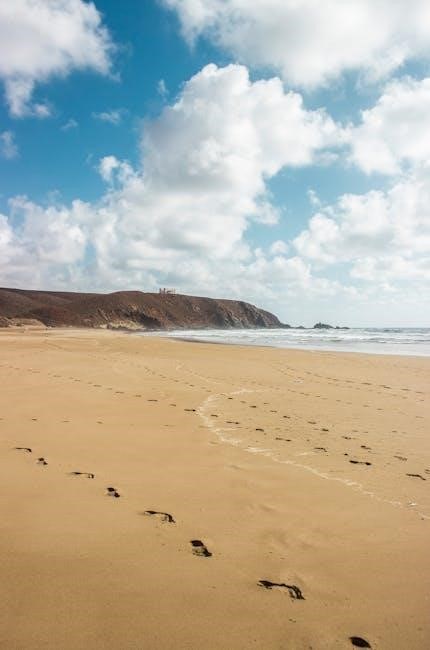
Utilize the map to identify key landmarks and anticipate terrain changes. This section showcases the region’s majestic forests and cliffs. Careful planning, aided by the PDF, ensures a comfortable start.
Reviewing the map beforehand allows hikers to appreciate the beauty and prepare for the challenges of this iconic Australian bushwalk.
Day 2: Yallingup to Smiths Beach (15km)
Day two of the Cape to Cape Track, a 15km hike from Yallingup to Smiths Beach, demands a reliable Cape to Cape Walk map PDF. This section reveals stunning coastal scenery, including rocky formations and secluded beaches.
The map details the trail’s undulations and potential hazards, aiding safe navigation. Utilize the PDF to pinpoint campsites and water sources along the route. Careful study of the map reveals the best vantage points for observing the region’s unique flora and fauna.
A well-consulted map enhances the experience, allowing hikers to fully appreciate this leg of the Western Australian adventure.
Day 3: Smiths Beach to Gracetown (19km)
The 19km stretch from Smiths Beach to Gracetown requires a detailed Cape to Cape Walk map PDF for effective planning. This section showcases the wild, uninhabited coastline, majestic forests, and challenging terrain.
A comprehensive map highlights crucial details like elevation changes and potential river crossings, ensuring a safer hike. The PDF format allows for easy access to waypoints and campsite locations. Utilizing the map, hikers can identify unique geological formations and plan for water source availability.
A reliable map is essential for navigating this longer leg of the iconic Western Australian trail.
Day 4: Gracetown to Prevelly (16km)
Navigating the 16km journey from Gracetown to Prevelly demands a reliable Cape to Cape Walk map PDF. This section of the trail reveals stunning coastal views, rocky formations, and access points to secluded beaches.
A detailed map provides essential information regarding the Leeuwin-Naturaliste Ridge traverse, highlighting potential challenges and scenic overlooks. The PDF format ensures easy access to campsite locations and water source details.

Utilizing a comprehensive map allows hikers to confidently explore this portion of the trail, appreciating the unique flora and fauna of the region. A well-planned route, guided by the map, enhances the overall experience.
Camping and Water Sources
A crucial element of Cape to Cape Walk map PDF resources is detailed information on designated campsites. These maps pinpoint locations along the 120km track, aiding in itinerary planning and ensuring overnight stays are within permitted areas.
Furthermore, the PDF guides highlight seasonal water availability, a vital consideration for hikers. Understanding water source locations and reliability, as shown on the map, is paramount for safety and comfort.
The Cape to Cape Walk map also provides guidance on water carrying considerations, helping hikers estimate required volumes based on distance between sources. Proper planning, using the map, guarantees a well-prepared and enjoyable trek.
Designated Campsites Along the Track
Cape to Cape Walk map PDF resources meticulously detail designated campsites along the 120km trail. These maps clearly mark locations, aiding hikers in planning overnight stops and adhering to park regulations.
Typically, the track is completed over 5-7 days with stays at these marked campsites, as indicated on the map. The PDF guides often include information about campsite facilities, such as toilet availability and shelter options.
Utilizing the Cape to Cape Walk map ensures hikers understand campsite locations relative to water sources and trail sections; Proper campsite selection, guided by the map, is essential for a comfortable and sustainable hiking experience.
Seasonal Water Availability
Cape to Cape Walk map PDF guides highlight the crucial aspect of seasonal water availability along the trail. Water sources are not consistently reliable throughout the year, demanding careful planning from hikers.
Detailed maps indicate known water sources, but the PDF resources emphasize that these can dry up, particularly during the warmer months. Hikers must consult recent trip reports and park alerts alongside the map.
The Cape to Cape Walk map doesn’t guarantee water; it merely shows potential locations. Responsible hikers utilize the map in conjunction with water carrying considerations, ensuring sufficient hydration throughout their journey.
Water Carrying Considerations
Cape to Cape Walk map PDF resources strongly advise hikers to carry sufficient water, given the unreliable seasonal availability. The map itself doesn’t dictate water levels, but highlights the distances between potential sources.

A minimum of 3 liters per person per day is recommended, potentially increasing during warmer weather. Hikers should utilize water purification tablets or filters as a backup, even at seemingly reliable sources, as indicated on the map.
Careful planning, informed by the Cape to Cape Walk map PDF and recent trip reports, is essential. Prioritize water weight, balancing hydration needs with pack weight for a safe and enjoyable trek.
Leeuwin-Naturaliste Ridge & Coastal Features
The Cape to Cape Walk map PDF showcases the dramatic landscape shaped by the Leeuwin-Naturaliste Ridge. This geological spine defines the trail, offering breathtaking views of the Indian Ocean and rugged coastline.
Maps detail unique formations – majestic forests, cliffs, caves, headlands, and rocky outcrops – that characterize the region. Coastal walking trails and steps down dunes, noted on the map, mitigate erosion while providing access.
The Cape to Cape Walk map PDF highlights the wild, uninhabited coastline, a haven for diverse flora and fauna. Understanding these features enhances the hiking experience and appreciation for Western Australia’s natural beauty.
Unique Geological Formations
The Cape to Cape Walk map PDF vividly illustrates the region’s remarkable geological diversity. Hikers will encounter stunning cliffs sculpted by millennia of ocean waves, and intricate cave systems hidden along the coastline.
Detailed maps pinpoint rocky formations and headlands offering panoramic views. The PDF guides you through areas showcasing the Leeuwin-Naturaliste Ridge’s influence on the landscape, revealing its dramatic contours.
These formations aren’t merely scenic; they’re integral to the trail’s challenge and beauty. The Cape to Cape Walk map PDF helps you navigate and appreciate these unique features, enhancing your understanding of Western Australia’s geological wonders.
Flora and Fauna of the Region
The Cape to Cape Walk map PDF highlights the rich biodiversity of this coastal region. Expect to discover majestic forests bordering the coastline, providing habitat for diverse wildlife.
Detailed map annotations point out areas where unique flora thrives, including native wildflowers and coastal vegetation. The PDF also indicates potential wildlife sightings, from birdlife to native mammals.

Understanding the region’s flora and fauna enhances the hiking experience. The Cape to Cape Walk map PDF serves as a valuable guide, promoting responsible exploration and appreciation of this fragile ecosystem. It’s a truly wild and uninhabited coastline!

Erosion Control Measures on the Trail
The Cape to Cape Walk map PDF details the significant efforts to protect this stunning coastline. Recognizing the impact of foot traffic, numerous erosion control measures have been implemented along the track.
Map annotations highlight the presence of coastal walking trails and strategically placed steps descending dunes. These features are designed to minimize soil disturbance and prevent further erosion, preserving the natural landscape.
The PDF emphasizes the importance of staying on designated paths. By understanding and respecting these measures, hikers contribute to the long-term sustainability of the Cape to Cape Track, ensuring its beauty for generations to come.
Preparing for the Walk
Utilizing a Cape to Cape Walk map PDF is the first step in thorough preparation. This essential resource details the 120km route, campsites, and water sources, crucial for planning your journey.
The PDF aids in compiling an essential gear checklist, factoring in Western Australia’s varied conditions. Consider seasonal water availability, as highlighted on the map, and plan accordingly for carrying sufficient supplies.
Reviewing safety considerations within the map’s accompanying guide is vital. Booking campsites and obtaining necessary permits, often detailed in the PDF, ensures a smooth and responsible experience on this iconic trail.
Essential Gear Checklist
A detailed Cape to Cape Walk map PDF informs your gear selection, highlighting the terrain and potential weather conditions. Pack sturdy hiking boots, appropriate clothing layers, and a reliable backpack.
Water carrying capacity is crucial, informed by the map’s indication of seasonal water sources. Include a water filter or purification tablets. Navigation tools – compass, GPS, and the PDF map itself – are essential.
First-aid supplies, sunscreen, insect repellent, and a headlamp are vital. Don’t forget a lightweight tent, sleeping bag, and cooking equipment if camping. The map PDF can help estimate distances and weight considerations.
Safety Considerations
Utilize your Cape to Cape Walk map PDF to understand the trail’s challenges and plan accordingly. Be aware of changing weather conditions; coastal areas can be unpredictable. Inform someone of your itinerary and expected return date.
The map highlights campsites and water sources, aiding in route planning and preventing dehydration. Watch for potential hazards like cliff edges and slippery rocks. Carry a personal locator beacon (PLB) for emergencies.
Respect the environment and follow Leave No Trace principles. Be mindful of wildlife and potential encounters. A downloaded PDF map ensures navigation even without signal. Prioritize safety and preparedness throughout your journey.
Booking and Permits
Planning with your Cape to Cape Walk map PDF is the first step, but securing bookings and permits is crucial. Designated campsites require reservations, especially during peak season. The Department of Biodiversity, Conservation and Attractions (DBCA) manages bookings.
Access the DBCA website for availability and to obtain necessary permits. Early booking is highly recommended, particularly for multi-day treks. Your map will indicate permitted camping areas.
Familiarize yourself with park regulations and fire restrictions. Ensure you have proof of booking and permits readily available during your walk. Proper planning, aided by your PDF map, guarantees a smooth and legally compliant experience.