Gskyer Telescope Manual: A Comprehensive Guide
This manual provides detailed instructions for Gskyer telescopes, assisting beginners with setup, usage, and maintenance for optimal stargazing experiences.
Gskyer telescopes are designed with the beginner in mind, offering an accessible entry point into the world of astronomy. These refractors, like the popular AZ70400, balance affordability with optical performance, allowing users to observe planets, the Moon, and brighter deep-sky objects.
Gskyer focuses on providing user-friendly setups and clear viewing experiences. Numerous online resources, including YouTube tutorials, support Gskyer owners. The brand’s commitment to quality and ease of use makes it a favored choice for those starting their astronomical journey, avoiding complicated setups and costs.

Understanding the AZ70400 Model
The Gskyer AZ70400 is a 70mm aperture, 400mm focal length refractor telescope, ideal for beginners. Its alt-azimuth mount simplifies movement, allowing for smooth up-and-down and left-to-right tracking. This model delivers clear views of the Moon, planets, and some brighter nebulae.
The AZ70400’s portability and ease of assembly make it a popular choice. It’s designed to minimize setup complexity, enabling quick stargazing sessions. Affordable and effective, it provides a solid foundation for exploring the night sky, avoiding overwhelming beginners.
Unboxing and Component Checklist
Carefully open the Gskyer telescope box and verify all components are present. You should find the telescope optical tube, an alt-azimuth mount, a tripod, eyepieces (typically 16mm and 4mm), a finder scope, and its bracket.
Also included are an adjustable tripod, user manual, and potentially a smartphone adapter. Inspect each part for any shipping damage. Refer to the included parts list to confirm everything is accounted for before proceeding with assembly. Contact customer support if anything is missing.
Identifying Telescope Parts
The optical tube houses the lenses, gathering and focusing light. The alt-azimuth mount allows for smooth vertical and horizontal movement. The tripod provides a stable base. Eyepieces magnify the image, with lower numbers yielding higher magnification.
The finder scope helps locate objects, while its bracket secures it to the tube. Familiarize yourself with the focuser knob, adjusting image sharpness. Understand the purpose of each component for successful assembly and operation.
Included Accessories
Your Gskyer telescope package typically includes multiple eyepieces, offering varied magnification levels for diverse viewing. A finder scope aids in initial object location, simplifying navigation of the night sky. The included adjustable tripod provides a stable observing platform.

You’ll also find an accessory tray for convenient storage during use. Instructions and a user manual are provided for guidance, ensuring a smooth setup and enjoyable stargazing experience.
Telescope Setup: A Step-by-Step Guide
Begin by carefully unpacking all components and referencing the included parts list. First, assemble the tripod, ensuring each leg is securely locked for stability. Next, attach the telescope tube to the tripod mount, tightening the securing screws.
Finally, mount the finder scope, aligning it with the main telescope for accurate object location. Proper assembly is crucial for optimal performance and a rewarding observing experience.
Assembling the Tripod
Start by extending the tripod legs to your desired height, ensuring they are evenly spaced for stability. Secure each leg lock to prevent unwanted movement during observation.
The accessory tray provides additional stability and a convenient location for eyepieces. Attach the tray to the tripod leg braces, tightening the screws firmly. A stable tripod is fundamental for clear and steady viewing, minimizing vibrations and maximizing enjoyment.
Attaching the Telescope Tube
Carefully align the telescope tube mounting rings with the dovetail plate on the telescope tube. Gently slide the tube into the rings, ensuring a snug but not overly tight fit.
Secure the tube by tightening the knobs on the mounting rings. Avoid over-tightening, as this could damage the tube. Finally, attach the assembled tube and rings to the tripod head, tightening the appropriate screws to firmly secure the telescope.
Mounting the Finder Scope
Locate the bracket on the telescope tube specifically designed for the finder scope. Gently slide the finder scope into this bracket, ensuring it’s securely held in place by the thumbscrews.
Do not fully tighten the screws yet; alignment is crucial. The finder scope should be positioned for comfortable viewing. Once roughly in place, lightly tighten the thumbscrews to prevent movement during the alignment process, detailed in the next section.
Using the Finder Scope
The finder scope assists in accurately locating celestial objects before viewing them through the main telescope. It has a wider field of view, making initial targeting easier. Begin by familiarizing yourself with its crosshairs – these are your aiming points.
Proper alignment (explained in the next section) is vital for effective use. Practice locating a distant terrestrial object during daylight to understand how the finder scope works in conjunction with the main telescope.
Aligning the Finder Scope
Accurate alignment ensures the finder scope and main telescope point to the same location. Choose a distant, stationary object during daylight – a telephone pole or treetop works well. Center this object in the main telescope’s eyepiece using a low-power eyepiece.

Without moving the main telescope, adjust the finder scope’s adjustment screws until the same object is centered within its crosshairs. Repeat this process for optimal precision.
Locating Celestial Objects
Utilize star charts or astronomy apps to identify target objects’ coordinates. Begin with bright, easily identifiable objects like the Moon or planets. Use the finder scope, now aligned, to locate the general area of your chosen celestial body.
Slowly move the telescope based on the coordinates, scanning the area. Once you suspect you’re close, switch to a low-power eyepiece for a wider field of view and refine your search.
Installing and Using Eyepieces
Eyepieces determine the telescope’s magnification. To install, gently insert the desired eyepiece into the focuser. Secure it with the set screw. Start with the lowest magnification eyepiece (highest focal length) for easier object location.
Higher magnification (lower focal length) provides detailed views but narrows the field of view and requires precise focusing. Always ensure the eyepiece is firmly seated before observing.
Understanding Eyepiece Magnification
Magnification is calculated by dividing the telescope’s focal length (400mm for the Gskyer 70400) by the eyepiece’s focal length. For example, a 20mm eyepiece yields 20x magnification (400mm / 20mm = 20x).
Higher magnification isn’t always better. Atmospheric conditions and telescope aperture limit useful magnification. Excessive magnification results in a dim, blurry image. Start low and gradually increase magnification.
Choosing the Right Eyepiece
The Gskyer telescope typically includes multiple eyepieces, offering varying magnifications. Lower magnification eyepieces (e.g., 25mm) provide a wider field of view, ideal for locating objects and observing larger celestial features like the Moon.
Higher magnification eyepieces (e.g., 10mm) are best for detailed views of planets and smaller objects, but require precise focusing and stable atmospheric conditions for optimal clarity.
Focusing the Telescope
Achieving a sharp image with your Gskyer telescope requires careful focusing. Slowly turn the focus knob until the viewed object appears as clear as possible. Fine adjustments are often necessary, especially at higher magnifications.
Atmospheric turbulence can cause images to appear blurry or shimmering. Patience is key; allow your eyes to adjust and wait for moments of clearer seeing to refine the focus.
Achieving Sharp Images
To obtain the clearest possible view, start with the lowest magnification eyepiece. This provides a wider field of view and makes initial focusing easier. Slowly rotate the focus knob, observing the image carefully.
Small adjustments are crucial. Once a general focus is achieved, make minute turns of the knob until details become crisp. Consider allowing the telescope to acclimate to the outside temperature for optimal performance.
Dealing with Atmospheric Turbulence
Atmospheric turbulence, often called “seeing,” can distort images. This manifests as shimmering or blurry views, even when the telescope is perfectly focused. Selecting nights with stable air is ideal, but not always possible.
Lower magnification eyepieces are less affected by turbulence. Also, observing objects when they are higher in the sky generally yields steadier views, as you’re looking through less atmosphere. Patience is key!
Tracking Celestial Objects
As Earth rotates, celestial objects appear to move across the sky, requiring constant adjustment to keep them in view. The Gskyer telescope’s mount plays a crucial role in this process.
The AZ70400 utilizes an Alt-Azimuth mount, meaning it moves up/down (altitude) and left/right (azimuth). Smooth, slow movements are essential for tracking. Practice makes perfect; anticipate the object’s motion and adjust accordingly for sustained observation.
Understanding Equatorial Mounts (if applicable)
While the Gskyer AZ70400 features an Alt-Azimuth mount, understanding Equatorial mounts is beneficial for future telescope endeavors. Equatorial mounts compensate for Earth’s rotation by aligning with the celestial pole.
This alignment allows for single-axis tracking, simplifying the process of keeping objects centered. They require polar alignment, a more complex setup, but offer superior tracking accuracy for astrophotography and extended viewing sessions.
Using the Alt-Azimuth Mount
The Gskyer AZ70400 utilizes a user-friendly Alt-Azimuth mount, allowing vertical (altitude) and horizontal (azimuth) movement. This intuitive design makes it ideal for beginners, requiring no complex polar alignment procedures.
Simply loosen the altitude and azimuth locks to adjust the telescope’s position. Tighten the locks to secure it in place. Smooth, controlled movements are key to tracking celestial objects across the night sky with this straightforward system.
Basic Astronomy for Beginners
Embark on your astronomical journey! With your Gskyer telescope, the cosmos awaits. Start by identifying bright planets like Venus and Mars, easily visible to the naked eye and stunning through the telescope. The Moon is an excellent first target, revealing craters and lunar seas.
Learn to locate constellations – patterns of stars with mythological origins – using star charts or astronomy apps. Patience and dark skies are your greatest allies in exploring the universe!
Identifying Planets
Locating planets with your Gskyer telescope requires knowing their positions. Venus shines brightly as the “morning star” or “evening star,” while Mars appears reddish. Jupiter displays its cloud bands and Galilean moons, and Saturn’s rings are a breathtaking sight.
Use astronomy apps or websites to find current planetary positions. Remember planets appear as small disks, not twinkling stars. Observing conditions and atmospheric stability greatly impact visibility.
Observing the Moon
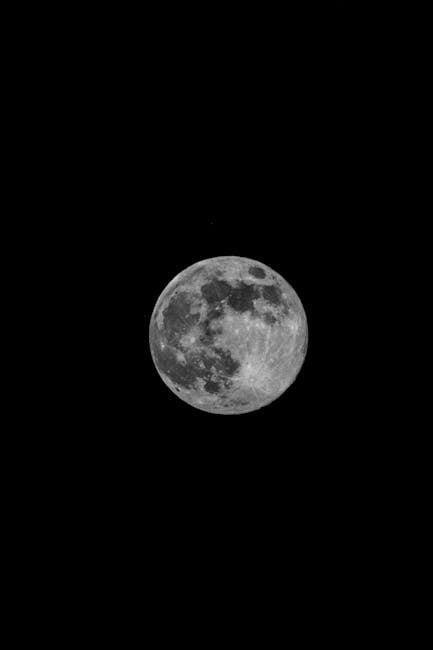
The Moon is an excellent celestial target for Gskyer telescope users, especially beginners. Its bright surface reveals craters, mountains, and vast plains (maria). Observe during different phases – a crescent shows stark shadows, while a full moon offers overall detail.
Lower magnification eyepieces provide a wider field of view, ideal for lunar landscapes. Higher magnification reveals finer details, but requires steady focusing and good atmospheric conditions.
Locating Constellations
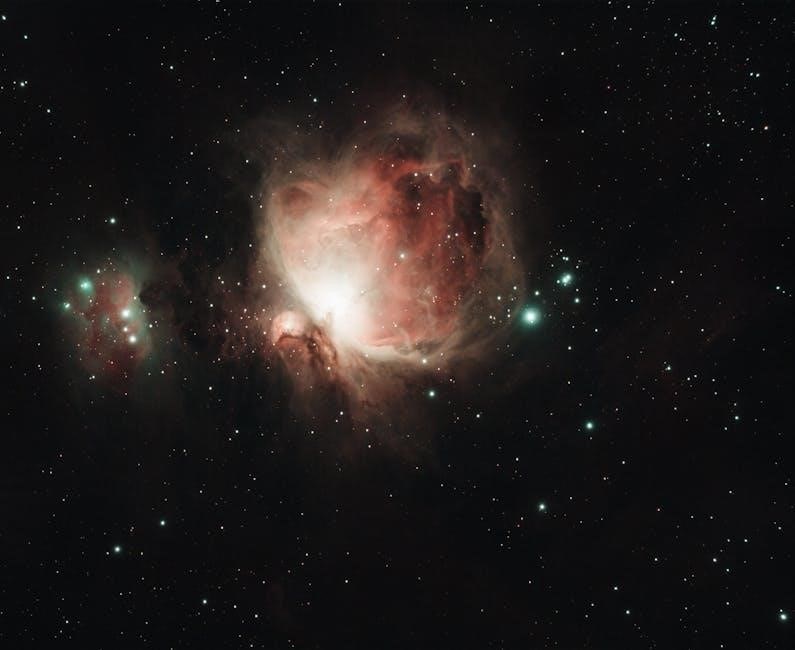
Finding constellations with your Gskyer telescope begins with star charts or astronomy apps. Start with bright, easily recognizable patterns like Orion or the Big Dipper. Use the finder scope to initially locate the general area, then switch to a lower-power eyepiece.
Slowly scan the sky, referencing your chart. Patience is key! Learning star patterns enhances your understanding of the night sky and aids in locating fainter objects.
Maintaining Your Gskyer Telescope
Proper maintenance ensures your Gskyer telescope’s longevity and performance. Regularly clean the optics with a specialized lens cleaning solution and microfiber cloth – avoid harsh chemicals. Dust the telescope tube and tripod frequently.
Store the telescope in a dry, dust-free environment, ideally in its original packaging. Protect the lenses from direct sunlight when not in use. Periodic checks of screws and connections prevent instability.
Cleaning the Optics
Maintaining clear optics is crucial for optimal viewing. Use a dedicated lens cleaning solution specifically designed for telescopes, never household cleaners. Apply a small amount to a clean, lint-free microfiber cloth;
Gently wipe the lens surface in a circular motion, avoiding excessive pressure. For stubborn smudges, repeat the process with a fresh cloth section. Protect the optics from dust by covering them when not in use.
Storing the Telescope
Proper storage protects your Gskyer telescope from damage and ensures longevity. Always store the telescope in a cool, dry place, away from direct sunlight and humidity. Disassemble the telescope after each use and store components separately in their original packaging or protective cases.
Avoid storing in attics or basements with extreme temperature fluctuations. Regularly check for dust and debris before storage, and consider a dust cover for added protection.
Troubleshooting Common Issues
Encountering problems? This section addresses frequent issues with your Gskyer telescope. Blurry images often stem from improper focusing or atmospheric turbulence – allow the telescope to acclimate to the outside temperature. Difficulty locating objects can be resolved by correctly aligning the finder scope and starting with low magnification.
Mount instability suggests a need to tighten screws or ensure the tripod is on a level surface.
Blurry Images
Experiencing unclear views? Several factors contribute to blurry images. First, ensure precise focusing using the fine adjustment knobs; small adjustments make a big difference. Secondly, allow the telescope to acclimate to the outside temperature for at least 30 minutes, minimizing distortions. Finally, recognize that atmospheric turbulence can impact image sharpness – it’s a natural limitation.
Difficulty Locating Objects
Struggling to find celestial targets? Begin by mastering the finder scope alignment – a crucial first step. Utilize star charts or astronomy apps to pinpoint object locations. Start with bright, easily identifiable objects like the Moon or planets. Remember the Earth rotates, so tracking is essential; use the mount’s slow-motion controls for adjustments. Patience and practice are key!
Mount Instability
Experiencing wobbling or shaking? Ensure the tripod is set up on a firm, level surface. Extend the tripod legs fully for maximum stability. Avoid extending the accessory tray too high, as it raises the center of gravity. Tighten all tripod and mount screws securely. Wind can also contribute; consider shielding the telescope during breezy conditions. A stable mount is vital for clear viewing.
Gskyer Telescope Accessories

Enhance your viewing with optional accessories! Filters reduce glare and improve contrast for planetary observation. Barlow lenses effectively increase magnification, revealing finer details. Consider purchasing additional eyepieces for varied magnifications and wider fields of view. Red dot finders simplify object location. Explore these additions to customize your Gskyer telescope and unlock its full potential for a richer astronomical experience.
Filters for Enhanced Viewing
Telescope filters significantly improve observation quality. Lunar filters reduce the moon’s brightness, enhancing detail. Light pollution filters block artificial light, revealing fainter deep-sky objects. Planetary filters boost contrast, showcasing atmospheric features on planets like Jupiter and Saturn. Color filters can isolate specific surface details. Experiment with different filters to optimize views based on the target and observing conditions.
Barlow Lenses for Increased Magnification
Barlow lenses effectively double or triple your telescope’s magnification without requiring additional eyepieces. They insert between the eyepiece and telescope, increasing the focal length. A 2x Barlow doubles magnification, while a 3x Barlow triples it. This is a cost-effective way to expand your observing range, particularly for planetary and lunar details. However, remember increased magnification also amplifies atmospheric distortion.

Resources for Further Learning

Expand your astronomical knowledge through online communities and helpful resources. YouTube offers numerous tutorials, including those specifically for Gskyer telescopes, demonstrating setup and stargazing techniques. Websites dedicated to astronomy provide detailed information on celestial objects and observing tips. Joining online forums connects you with fellow enthusiasts, fostering a collaborative learning environment. Recommended books offer in-depth explorations of the cosmos.
Online Astronomy Communities
Connect with fellow stargazers and expand your knowledge through vibrant online communities. Numerous forums and groups cater to amateur astronomers, offering a space to ask questions, share observations, and learn from experienced enthusiasts. These platforms often feature dedicated sections for specific telescopes, including Gskyer models, providing tailored advice and support. Engage in discussions, participate in observing challenges, and build lasting connections within the astronomy community.
Recommended Books and Websites
Enhance your astronomical journey with curated resources designed for beginners. Websites like Space.com and Sky & Telescope offer current news, observing guides, and equipment reviews. For in-depth learning, consider books such as “Turn Left at Orion” or “NightWatch.” These resources provide star charts, object descriptions, and practical tips for using your Gskyer telescope effectively, deepening your understanding of the cosmos and improving your stargazing skills.
Gskyer Telescope Safety Precautions
Prioritize safety during all observations. Never, under any circumstances, look directly at the sun through the telescope or finder scope – permanent eye damage can result instantly. Supervise children closely when using the telescope. Avoid observing near power lines or obstructions. Protect the optics from dust and moisture. Always store the telescope securely to prevent accidental falls or damage, ensuring a safe and enjoyable stargazing experience.
Never Look Directly at the Sun
Looking directly at the sun, even for a brief moment, through a telescope can cause severe and permanent eye damage, including blindness. The concentrated solar rays will instantly burn the retina. Never use a telescope to project an image of the sun onto a surface without proper solar filters. Always prioritize eye safety; appropriate solar filters are essential for safe solar viewing.
Protecting Your Eyes
Always exercise caution when observing with your Gskyer telescope to safeguard your vision. Avoid looking through the telescope for extended periods, as eye strain can occur. Ensure children are always supervised during telescope use. Regularly check the telescope and accessories for any damage that could pose a safety risk. Prioritize safe observing practices for a rewarding astronomical experience.
YouTube Tutorials for Gskyer Telescopes
Numerous helpful video tutorials are available on YouTube to guide you through every aspect of your Gskyer telescope. LearnToStargaze and other channels offer setup guides, focusing techniques, and object location assistance. Explore videos demonstrating assembly, eyepiece usage, and troubleshooting common issues. These visual resources complement this manual, providing a dynamic learning experience for all skill levels.
Understanding Telescope Specifications (70/400mm)
The Gskyer AZ70400 telescope features a 70mm aperture, determining light-gathering ability, and a 400mm focal length, impacting magnification and image scale. A larger aperture reveals fainter objects, while the focal length, combined with eyepieces, dictates viewing power. This 70/400mm configuration offers a balance suitable for beginners exploring planets, the Moon, and brighter deep-sky objects.
Gskyer Telescope vs. Competitors
Compared to competitors, Gskyer telescopes often provide excellent value for beginners, offering a good balance of features and affordability. While some brands may boast superior optics or more robust mounts, Gskyer focuses on accessibility. Competitors like Celestron and Orion offer wider ranges, but Gskyer’s AZ70400 is frequently praised for its ease of use and suitability for those new to astronomy, making it a strong contender.
Warranty Information and Customer Support
Gskyer typically offers a limited warranty on their telescopes, covering manufacturing defects for a specified period – often one year from the purchase date. Customer support is generally accessible through their official website, offering FAQs, troubleshooting guides, and contact forms for direct assistance. Response times can vary, but Gskyer aims to resolve issues promptly, ensuring customer satisfaction with their products and services.