Kettlebells are gaining popularity for efficient, effective workouts, dating back to 18th-century origins, and offering a unique ballistic training experience.
This introduction explores how to begin a kettlebell journey, strengthening muscles and the cardiovascular system, suitable for home or gym environments.
Discover the benefits and foundational exercises to kickstart your fitness with this versatile tool, regardless of current fitness level or experience.
What are Kettlebells?
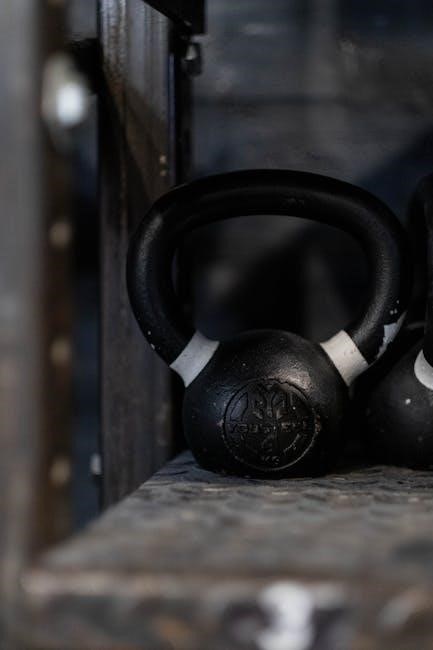
Kettlebells are uniquely shaped weights, resembling a cannonball with a handle, differing significantly from traditional dumbbells. Their off-center mass presents a dynamic challenge, engaging more stabilizing muscles during exercises. Historically, kettlebells originated in 18th-century Russia, initially used as weights for market transactions, evolving into a training tool for strength and endurance.
Unlike dumbbells, which distribute weight evenly, the kettlebell’s imbalance forces your body to constantly adjust, improving functional strength and coordination. This makes them incredibly versatile for ballistic exercises like swings, snatches, and cleans, as well as more controlled movements like presses and rows.
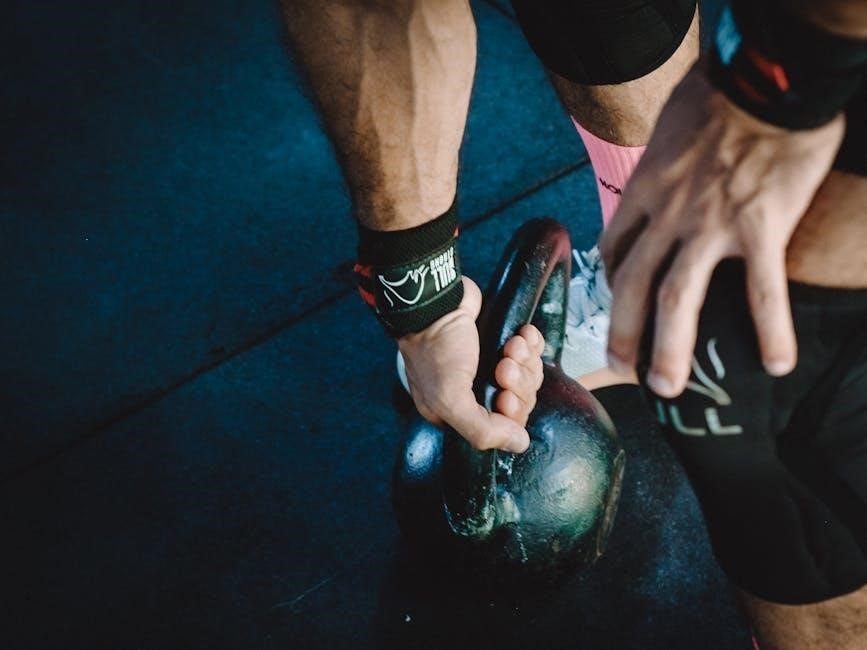
The handle allows for a variety of grips and movements, enabling full-body workouts with a single piece of equipment. They are constructed from cast iron, and come in varying weights to suit different fitness levels. Choosing the right weight is crucial for proper form and preventing injury, a topic we’ll explore later.
Benefits of Kettlebell Training
Kettlebell training offers a multitude of benefits, extending beyond traditional strength building. The dynamic nature of kettlebell exercises improves cardiovascular fitness, making workouts efficient for both muscle strengthening and heart health. The off-center weight challenges your core, enhancing stability and balance, crucial for everyday movements and athletic performance.
Kettlebells promote functional strength, meaning the strength you gain translates directly to real-life activities. They engage multiple muscle groups simultaneously, increasing calorie burn and improving overall body composition. Furthermore, kettlebell movements often require explosive power, boosting athletic ability and coordination.
This type of training can also improve grip strength, posture, and flexibility. The versatility of kettlebells allows for a wide range of exercises, preventing plateaus and keeping workouts engaging. Whether at home or in the gym, kettlebells provide a powerful and effective fitness solution.
Essential Kettlebell Exercises for Beginners
Beginners should focus on foundational movements like swings, goblet squats, deadlifts, presses, and rows to build strength and master proper technique safely.
Kettlebell Swing
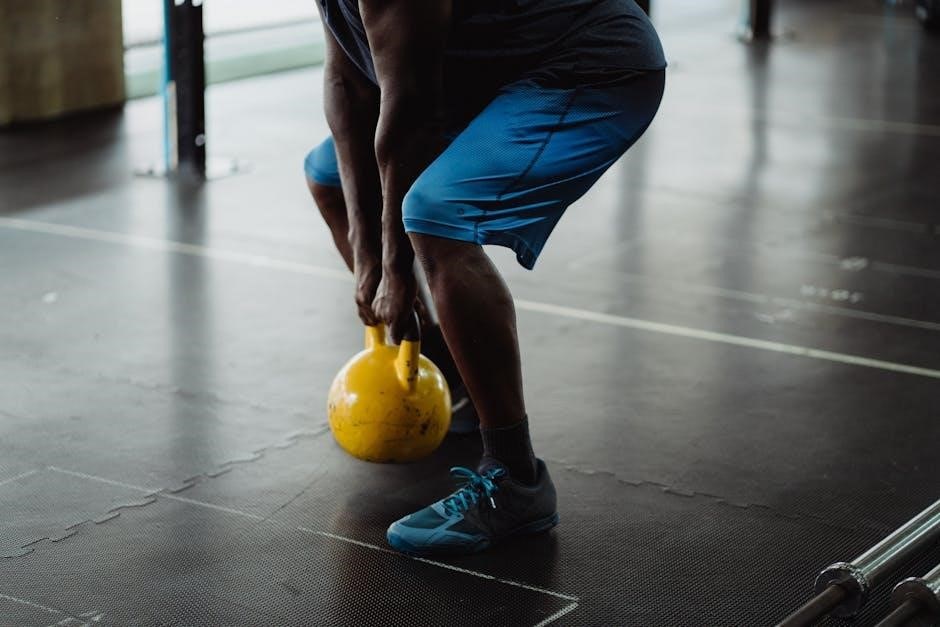
The Kettlebell Swing is a dynamic, full-body exercise forming the cornerstone of many kettlebell routines. It’s crucial to master the hip hinge movement – think of snapping the hips forward to power the swing, not lifting with your back.
Begin with a stance slightly wider than shoulder-width, kettlebell a few inches in front of you. Hinge at the hips, keeping your back straight, and grab the kettlebell with both hands. Hike the kettlebell back between your legs, then explosively drive your hips forward, swinging the kettlebell to chest height.
Maintain a tight core throughout the movement, and avoid rounding your back. The power should come from your hips and glutes, not your arms. Focus on controlling the descent of the kettlebell, absorbing the momentum with your hips and core. This exercise builds explosive power, strengthens the posterior chain, and improves cardiovascular fitness.
Start with lighter weights and prioritize form over speed or weight. Practice the hip hinge without the kettlebell to build muscle memory before adding resistance.
Goblet Squat
The Goblet Squat is an excellent beginner-friendly squat variation, promoting proper form and engaging the core. Holding the kettlebell close to your chest – like a goblet – encourages an upright torso and prevents leaning forward.
Stand with feet slightly wider than shoulder-width apart, toes pointed slightly outward. Hold the kettlebell vertically against your chest, elbows pointing down. Initiate the squat by pushing your hips back and bending your knees, keeping your back straight and core engaged.
Descend until your thighs are parallel to the ground, or as low as comfortably possible while maintaining good form. Drive through your heels to return to the starting position, squeezing your glutes at the top.
The goblet squat improves lower body strength, core stability, and squatting technique. It’s a fantastic exercise for building a solid foundation for more advanced squat variations. Focus on controlled movements and maintaining a neutral spine throughout the exercise.
Kettlebell Deadlift
The Kettlebell Deadlift is a foundational exercise for building posterior chain strength – targeting your glutes, hamstrings, and back; Unlike a traditional barbell deadlift, the kettlebell’s offset weight challenges core stability and improves grip strength.
Stand with feet shoulder-width apart, the kettlebell positioned slightly in front of you. Hinge at your hips, keeping your back straight and core engaged, and reach down to grasp the kettlebell with both hands. Maintain a neutral spine throughout the movement.
Drive through your heels, extending your hips and knees simultaneously to lift the kettlebell off the ground. Keep the kettlebell close to your body as you stand up tall, squeezing your glutes at the top. Lower the kettlebell back to the ground with control, maintaining a straight back.
Focus on proper form to avoid injury. This exercise builds strength and improves overall movement patterns.
Kettlebell Press
The Kettlebell Press is an excellent exercise for developing shoulder strength and stability, dynamically engaging the core. It’s a fantastic alternative to dumbbell shoulder presses, offering a unique challenge due to the kettlebell’s offset center of gravity.
Begin by cleaning the kettlebell to the rack position – holding it close to your chest with your elbow tucked in. Brace your core and maintain a neutral spine. Press the kettlebell overhead, extending your arm fully, but avoid locking your elbow.
Focus on controlling the movement throughout the entire range of motion. Lower the kettlebell back to the rack position with control, maintaining core engagement. Repeat for the desired number of repetitions.
This exercise trains dynamic stability in the shoulder joint, enhancing functional strength. Proper form is crucial to prevent injury and maximize effectiveness.
Kettlebell Rows
Kettlebell Rows are a powerful exercise for building back strength and improving posture. They effectively target the lats, rhomboids, and traps, contributing to a stronger, more balanced physique. Unlike traditional barbell rows, kettlebell rows require greater core stabilization.
Begin by hinging at the hips, keeping your back straight and core engaged. Allow the kettlebell to hang naturally towards the floor. Pull the kettlebell up towards your chest, keeping your elbow close to your body and squeezing your shoulder blades together.
Focus on driving the movement with your back muscles, not your arms. Lower the kettlebell back to the starting position with control. Maintain a neutral spine throughout the exercise to avoid lower back strain.
Kettlebell rows enhance upper body pulling strength and contribute to improved overall body mechanics. Prioritize controlled movements and proper form.
Building Your Beginner Kettlebell Workout
Begin with two to three weekly sessions, gradually increasing frequency as comfort grows. Combine kettlebell training with other exercises for a balanced routine.
Prioritize a proper warm-up and cool-down, including stretching, to prepare and recover your muscles effectively.
Workout Frequency
Establishing a consistent workout frequency is crucial for beginners to see results and avoid overtraining. Start with two to three kettlebell workouts per week, allowing adequate recovery time between sessions. This approach allows your muscles to adapt to the new demands placed upon them, minimizing the risk of injury and maximizing progress.
As you become more comfortable with the exercises and experience increased strength and endurance, you can gradually increase the frequency to four workouts per week. However, it’s essential to listen to your body and prioritize rest when needed. Overtraining can lead to fatigue, decreased performance, and an increased risk of injury.
Remember to incorporate rest days into your schedule to allow your muscles to repair and rebuild. Combining kettlebell training with other forms of exercise, such as cardio or bodyweight exercises, can create a well-rounded and balanced fitness routine. This variety helps prevent plateaus and keeps your workouts engaging.
Consistency is key, so find a schedule that fits your lifestyle and stick to it as much as possible.
Warm-up Routine
Prior to each kettlebell workout, a dynamic warm-up is essential to prepare your muscles and joints for the movements ahead. Begin with 5-10 minutes of light cardio, such as jogging in place or jumping jacks, to increase blood flow and raise your body temperature.
Follow this with dynamic stretches that mimic the movements you’ll be performing during your workout. Include arm circles, leg swings, torso twists, and hip rotations. These movements improve range of motion and prepare your muscles for the specific demands of kettlebell training.
Specifically, incorporate exercises that activate the muscles you’ll be using, such as bodyweight squats, lunges, and push-ups. Don’t forget to include core activation exercises like planks and bird dogs. A proper warm-up reduces the risk of injury and enhances performance.
Focus on controlled movements and gradually increase the intensity as you warm up.
Cool-down and Stretching
Following your kettlebell workout, a proper cool-down is crucial for recovery and injury prevention. Begin with 5-10 minutes of light cardio, such as walking, to gradually lower your heart rate and allow your body to transition back to a resting state.
Transition into static stretching, holding each stretch for 20-30 seconds. Focus on the major muscle groups worked during the workout, including your legs, glutes, back, shoulders, and core. Examples include hamstring stretches, quad stretches, chest stretches, and tricep stretches.
Deep breathing during stretching can enhance relaxation and improve flexibility. Remember to stretch to the point of tension, not pain. Consistent cool-downs and stretching routines improve recovery, reduce muscle soreness, and enhance long-term flexibility.
Prioritize this step to maximize the benefits of your kettlebell training.
Advanced Beginner Exercises
Progress beyond foundational movements with exercises like the Kettlebell Turkish Get-Up (modified) and the Kettlebell Clean and Press.
These build upon existing strength, demanding greater coordination and control for enhanced fitness gains.
Kettlebell Turkish Get-Up (Progression)
The Turkish Get-Up is a complex, full-body exercise demanding coordination, strength, and stability. It’s best approached as a progression, starting without weight to master the movement pattern.
Begin by lying on your back with a kettlebell extended towards the ceiling in one hand. Roll onto your forearm, then press up onto your hand, keeping the kettlebell stable.
Next, bridge your hips off the ground and sweep your leg underneath you to come into a kneeling position. Finally, stand up while maintaining control of the kettlebell overhead. Reverse the steps to return to the starting position.
Progression: Initially, practice the movement with no weight; Then, use a light kettlebell and focus on slow, controlled movements. Ensure a straight wrist and a stable core throughout the exercise. As strength improves, gradually increase the kettlebell weight.
This exercise enhances shoulder stability, core strength, and overall body awareness, making it a valuable addition to any fitness routine.
Kettlebell Clean and Press
The Kettlebell Clean and Press is a dynamic, compound exercise combining a clean – bringing the kettlebell from the floor to the rack position – with an overhead press. It builds strength and power throughout the entire body.
Begin with the kettlebell on the floor between your feet. Hinge at the hips, keeping your back straight, and grab the kettlebell. Drive through your legs and pull with your arms to “clean” the kettlebell to the rack position (resting on your forearm).
From the rack position, press the kettlebell overhead, fully extending your arm. Lower the kettlebell back to the rack, then repeat the clean and press;
Focus on maintaining a strong core and a stable base throughout the movement. Avoid rounding your back during the clean and ensure a controlled descent during the press. Start with a lighter weight to master the technique before increasing the load;
This exercise effectively targets the legs, core, shoulders, and arms, offering a comprehensive workout.
Workout Variations & Progression
Explore diverse kettlebell routines – full body strength, cardio & strength blends, and core-focused sessions – to challenge your body and prevent plateaus.
Gradually increase repetitions, sets, or weight to continually progress and maximize results.
Workout 1: Full Body Strength
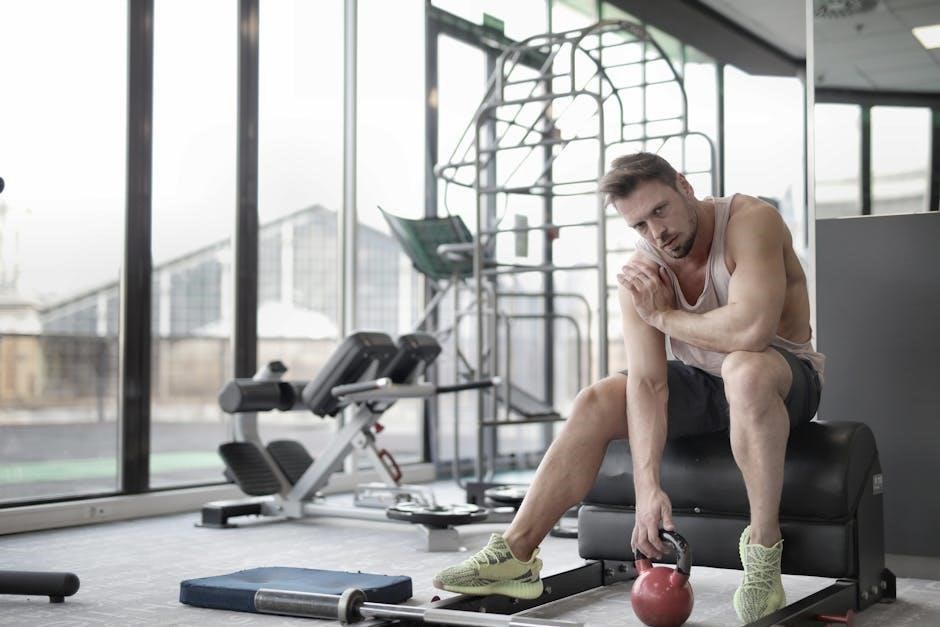
This workout targets major muscle groups, building a foundation of strength and endurance. Perform each exercise for the recommended repetitions, completing 3 sets with 60-90 seconds rest between sets. Remember to prioritize proper form over speed or weight.
- Kettlebell Swings (10-12 reps): Focus on hip drive, maintaining a straight back.
- Goblet Squats (8-10 reps): Hold the kettlebell close to your chest, squatting with good form.
- Kettlebell Deadlifts (8-10 reps per side): Keep your back straight and core engaged throughout the movement.
- Kettlebell Press (6-8 reps per side): Press the kettlebell overhead, controlling the descent.
- Kettlebell Rows (8-10 reps per side): Maintain a flat back and pull the kettlebell towards your chest.
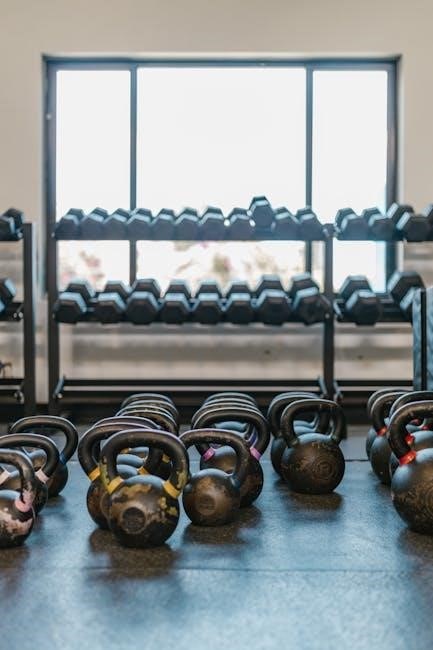
Beginners should start with a lighter kettlebell and focus on mastering the technique before increasing the weight. This workout can be performed 2-3 times per week, with rest days in between.
Listen to your body and adjust the intensity as needed.
Workout 2: Cardio & Strength
This dynamic workout combines cardiovascular exercise with strength training, boosting both endurance and muscle tone. Perform each exercise for the specified time or repetitions, completing 3 rounds with minimal rest between exercises and 2 minutes rest between rounds. Focus on maintaining a consistent pace.
- Kettlebell Swings (20 seconds): Explosive hip drive is key for maximizing cardio benefits.
- Kettlebell High Pulls (10 reps per side): Pull the kettlebell up towards your chin, engaging your core.
- Burpees with Kettlebell (8 reps): Incorporate a kettlebell into the burpee for added challenge.
- Kettlebell Lunges (10 reps per leg): Step forward into a lunge, holding the kettlebell in a goblet position.
- Kettlebell Russian Twists (15 reps per side): Sit with knees bent and twist your torso, holding the kettlebell.
Adjust the kettlebell weight to match your fitness level. This workout is excellent for burning calories and improving overall fitness.
Remember to stay hydrated and listen to your body.
Workout 3: Core Focused
This workout prioritizes strengthening your core muscles, improving stability and posture. Complete 3 rounds of the following exercises with 60 seconds rest between each round. Maintain proper form throughout each exercise to maximize effectiveness and prevent injury. Focus on controlled movements and engaging your core throughout.
- Kettlebell Windmills (8 reps per side): Maintain a straight arm and hinge at the hips, keeping your core engaged.
- Kettlebell Russian Twists (20 reps per side): Sit with knees bent and rotate your torso, holding the kettlebell.
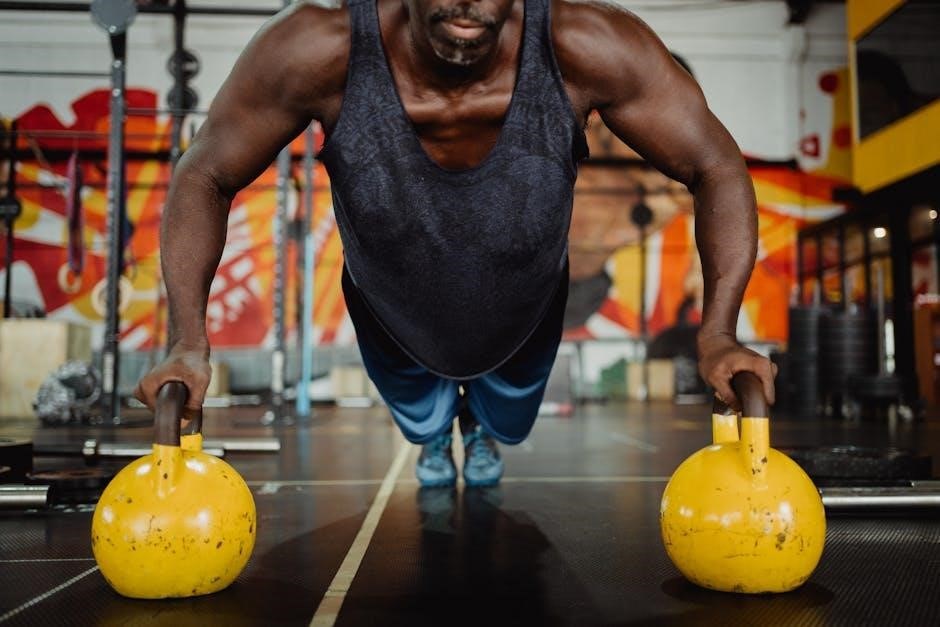
- Kettlebell Plank Drags (10 reps per side): In a plank position, drag the kettlebell from side to side.
- Kettlebell Side Bends (15 reps per side): Stand with feet shoulder-width apart and bend to the side, holding the kettlebell.
- Kettlebell Dead Bugs (10 reps per side): Lie on your back and alternate lowering opposite arm and leg.
Choose a lighter kettlebell for these exercises to prioritize form over weight. This routine will enhance core strength and stability.

Safety Considerations
Prioritize proper form and technique to avoid potential risks like strains or injuries. Select a suitable kettlebell weight for your fitness level.
Always warm up and cool down!
Proper Form and Technique
Maintaining correct form is paramount when beginning kettlebell training, as it directly impacts effectiveness and minimizes injury risk. Focus on engaging your core throughout every exercise – think of it as a natural weightlifting belt, providing stability and protecting your spine.
Keep your back straight, avoiding rounding, especially during swings and deadlifts. Initiate movements from your hips and glutes, not your lower back. A slight bend in your knees is crucial for absorbing impact and maintaining balance.
Control the kettlebell; avoid letting it control you. Each repetition should be deliberate and controlled, focusing on the muscles being targeted. Pay attention to your breathing – exhale during the exertion phase of each exercise.
Consider recording yourself to review your technique or working with a qualified trainer to receive personalized feedback. Mastering the fundamentals will build a solid foundation for more advanced movements.
Choosing the Right Kettlebell Weight
Selecting the appropriate kettlebell weight is crucial for beginners to ensure proper form and prevent injuries. It’s better to start lighter than you think you need, prioritizing technique over lifting heavy immediately.
For women, a good starting point is typically 8-12kg (18-26lbs), while for men, 12-16kg (26-35lbs) is often recommended. However, these are just guidelines; individual strength levels vary significantly.
Consider your current fitness level. If you’re new to exercise, begin with a lighter weight and gradually increase it as your strength and technique improve. You should be able to perform 10-12 repetitions of each exercise with good form before considering a heavier kettlebell.
Don’t be afraid to experiment with different weights to find what feels comfortable and challenging. Prioritize control and proper technique over lifting the heaviest weight possible.
Potential Risks and How to Avoid Them
Kettlebell training, while effective, carries potential risks if proper form isn’t maintained. Common injuries include lower back strain, shoulder impingement, and wrist discomfort. Prioritizing technique is paramount to mitigate these risks.
Incorrect form during swings can lead to lower back pain; maintain a neutral spine and engage your core. Improper pressing technique can strain the shoulders – focus on controlled movements and avoid arching your back.
Always warm up thoroughly before each workout to prepare your muscles and joints. Cool down and stretch afterward to improve flexibility and reduce muscle soreness. Listen to your body and stop if you experience any pain.
Start with lighter weights and gradually increase the load as your strength and technique improve. Consider working with a qualified trainer to learn proper form and technique, especially when starting.