Stealth Cam Setup Instructions: A Comprehensive Guide
Navigating the world of trail cameras requires understanding setup, from initial configuration to data management, ensuring successful wildlife observation and scouting efforts.
Understanding Stealth Cam Technology
Stealth cam technology centers around remotely capturing images and videos, utilizing infrared triggers and low-glow LEDs for discreet operation. These cameras employ sensors to detect motion and heat signatures, activating the shutter to record passing wildlife. Modern advancements include cellular connectivity, allowing for instant image transmission to smartphones or computers. Understanding trigger speed, detection range, and image resolution is crucial for optimal performance.
Furthermore, features like time-lapse recording and hybrid modes enhance versatility.
Choosing the Right Stealth Cam Model
Selecting the ideal stealth cam hinges on your scouting needs and budget. Consider the terrain, target species, and desired features. Do you require real-time image access, or is periodic data retrieval sufficient? Cellular models offer convenience but necessitate a data plan. Non-cellular cameras are cost-effective for localized monitoring.
Prioritize image quality, detection range, and trigger speed. Evaluate flash options – infrared for stealth, white flash for clarity – and battery life expectations.
Cellular vs. Non-Cellular Cameras
Cellular cameras transmit images wirelessly to your smartphone or email, offering instant access to scouting data, regardless of location. This requires a cellular plan and consistent signal strength, adding to the overall cost. They are ideal for remote properties or monitoring quickly changing conditions.
Non-cellular cameras store images on an SD card, requiring physical retrieval. They are more affordable and suitable for areas with limited cellular coverage, prioritizing privacy and eliminating monthly fees.
Image Resolution & Video Quality Considerations
Higher megapixel counts (MP) deliver sharper images, crucial for identifying distant animals or details. However, larger file sizes demand more SD card space and faster transmission speeds for cellular models. Consider 8MP to 20MP as a sweet spot for most scouting needs.
Video quality is measured in resolution (720p, 1080p, 4K) and frames per second (FPS). Higher resolutions and FPS provide clearer, smoother footage, but also increase file sizes. 1080p at 30FPS is generally sufficient for capturing valuable wildlife activity.
Essential Equipment & Accessories
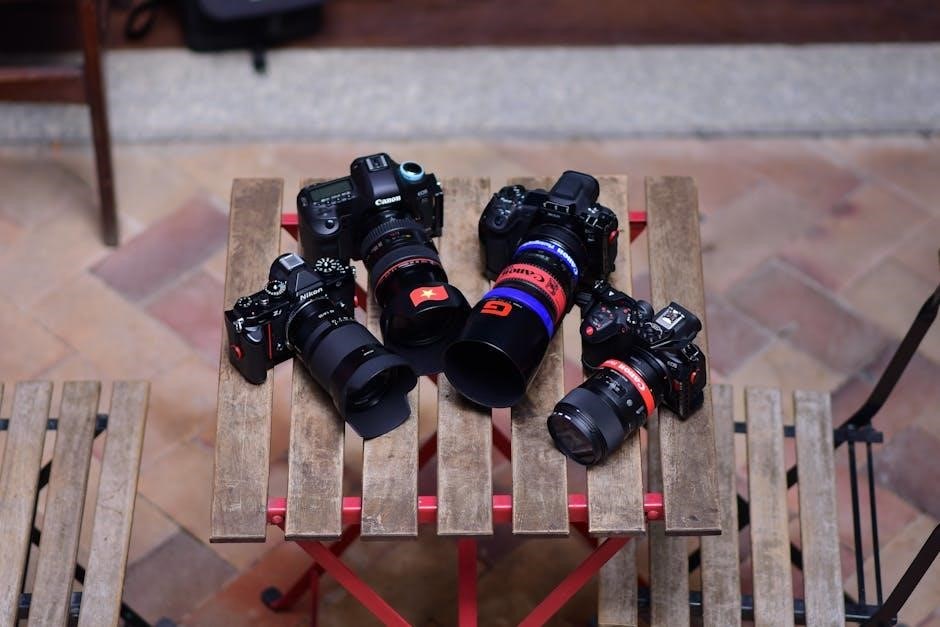
Beyond the camera itself, several accessories are vital for optimal performance. A high-capacity, fast SD card is crucial for storing images and videos – aim for at least 32GB, Class 10 or UHS-I. Reliable batteries are paramount, especially in cold weather; lithium batteries generally outperform alkaline.
Secure mounting hardware, including straps, brackets, and potentially a security box, protects your investment from theft and ensures stable image capture. Consider a lock to further deter tampering and maintain camera positioning.
SD Cards: Capacity & Speed Requirements
Selecting the right SD card significantly impacts your stealth cam’s performance. Capacity should align with your desired recording duration and resolution; 32GB to 64GB is a good starting point for most users. However, speed is equally critical.
Opt for a Class 10 or UHS-I card to ensure sufficient write speed for high-resolution photos and videos, preventing lag or corrupted files. Avoid cheaper, slower cards, as they can lead to missed shots and frustrating results.
Batteries: Types & Cold Weather Performance
Stealth cams typically utilize AA or AAA batteries, with lithium batteries generally outperforming alkaline in extreme conditions. Lithium batteries offer a wider temperature range and longer lifespan, crucial for reliable operation.
Cold weather drastically reduces battery performance; consider using lithium batteries specifically designed for cold temperatures or an external battery pack. Regularly check battery levels, and replace them proactively to avoid missed captures during critical scouting periods.
Mounting Hardware: Straps, Brackets & Security Boxes
Secure mounting is vital for optimal camera performance and preventing theft. Adjustable straps are versatile for trees, while brackets offer stability on posts or flat surfaces.
For enhanced security, invest in a security box and cable lock. These deter theft and protect the camera from the elements and vandalism. Ensure the mounting hardware doesn’t obstruct the camera’s field of view, and regularly inspect for tightness and damage.
Location, Location, Location: Optimal Camera Placement
Strategic placement dramatically impacts the quality of captured images and videos. Focus on identifying game trails – well-worn paths used by animals – and areas exhibiting high activity, like near food or water sources.
Consider the sun’s angle to avoid glare and ensure clear images. Background scenery should provide context without obscuring the subject. Height is crucial; typically 3-5 feet off the ground is ideal for most wildlife.
Identifying Game Trails & High-Activity Areas
Locating established game trails is paramount for successful monitoring. Look for visible paths, tracks, and droppings indicating frequent animal movement. Areas near food sources – like fruit trees or agricultural fields – often attract wildlife.
Water sources are also hotspots. Observe for rubs on trees (deer) or scratching posts (bears). Scouting during dawn and dusk increases your chances of spotting active areas, maximizing camera effectiveness.
Considering Sun Angle & Background Scenery
Optimal camera placement minimizes glare and maximizes image clarity. Avoid aiming directly into the rising or setting sun, as this causes overexposure and washes out images. Consider the background; a cluttered scene distracts from the subject.
A natural, non-reflective backdrop enhances visibility. Dense foliage can trigger false alarms from wind, so find a balance. Think about how shadows will fall throughout the day, ensuring consistent image quality.
Initial Camera Setup & Configuration
Begin by carefully opening the camera housing and inserting a compatible SD card, ensuring it clicks securely into place. Next, install the appropriate batteries, observing correct polarity as indicated inside the battery compartment.
Power on the camera and navigate the menu to set the correct date and time. Assigning a unique camera name aids in organization when managing multiple devices and reviewing collected data later.
Inserting SD Card & Batteries
Locate the SD card slot, typically on the camera’s side or within the battery compartment. Gently insert the SD card until it clicks, avoiding excessive force. For batteries, adhere to the polarity markings (+ and -) inside the compartment.
Use fresh, high-quality batteries, preferably lithium for colder climates. Ensure the battery door seals tightly to protect against moisture. Incorrect insertion can damage the camera, so double-check before closing.
Setting Date, Time & Camera Name
Access the camera’s menu using the control buttons, navigating to the date and time settings. Accurate date and time stamping are crucial for organizing and analyzing captured images and videos. Input the correct information carefully, confirming the format (MM/DD/YYYY or DD/MM/YYYY).
Assigning a unique camera name aids in identification when managing multiple cameras. This simplifies data organization and allows for easy tracking of specific locations or scouting areas.
Understanding Camera Modes: Photo, Video & Hybrid
Stealth cams typically offer three primary operating modes: Photo, Video, and Hybrid. Photo mode captures still images upon detecting motion, ideal for quick snapshots of wildlife activity. Video mode records moving subjects, providing more detailed observations.
Hybrid mode combines both photo and video capture, offering a comprehensive record of events. Selecting the appropriate mode depends on your scouting goals and desired level of detail.

Configuring Detection Settings
Optimizing detection settings is crucial for effective scouting. Sensitivity adjustment controls how much movement triggers the camera; higher sensitivity detects smaller movements, but increases false triggers from wind or vegetation. Recovery mode dictates the time delay between image captures.
Shorter recovery times capture more activity, while longer times conserve battery life and SD card space. Fine-tuning these settings minimizes unwanted images and maximizes useful data collection.
Sensitivity Adjustment: Minimizing False Triggers
Adjusting sensitivity is key to reducing unwanted images. Lowering the sensitivity setting decreases the camera’s responsiveness to motion, filtering out triggers from small animals, swaying branches, or heat changes. However, excessively low settings might miss larger game.
Start with a medium setting and review images. Increase sensitivity if animals are missed, and decrease it if false triggers are frequent, finding the optimal balance for your location.
Recovery Mode: Controlling Image Capture Rate
Recovery mode dictates the delay between image captures after detecting motion. A shorter recovery time (e.g., 1 second) maximizes the number of images, ideal for active areas, but consumes battery life quickly.
Longer recovery times (e.g., 60 seconds) conserve battery power, suitable for locations with less frequent activity. Experiment to find a balance; consider the expected animal density and battery capacity to optimize performance.
Image & Video Resolution Settings
Resolution significantly impacts image clarity and file size. Higher resolutions (e.g., 20MP) provide detailed images, useful for identification, but require more SD card space and battery power. Lower resolutions (e.g., 8MP) are sufficient for general monitoring and conserve resources.
For video, consider 720p or 1080p. Higher video resolution offers better detail, but generates larger files. Balance desired clarity with storage capacity and battery life for optimal results.
Flash Options: Infrared vs. White Flash
Stealth cams utilize infrared (IR) or white flash technology for nighttime imaging. IR flash is virtually invisible to wildlife, minimizing disturbance, but can result in black and white images. White flash provides color night images, potentially spooking animals, but offering more detail.
Consider the environment and target species. For sensitive areas, IR is preferred. If color identification is crucial and disturbance is less of a concern, white flash may be suitable.
Understanding Flash Range & Detection Distance
Flash range dictates how far the camera can effectively illuminate a scene at night, while detection distance determines how far away it can sense movement. These aren’t always equal; a longer detection range doesn’t guarantee a long flash range.
Consider the terrain and desired image clarity. Wider areas require greater ranges, but excessive range can wash out images. Match the flash range to the expected animal distances for optimal results.
Setting Up Remote Transmission (Cellular Cameras)
Cellular cameras offer the convenience of receiving images and videos directly to your smartphone or computer, eliminating the need for physical card retrieval. This requires selecting a cellular plan from a provider compatible with your camera model.
Activation typically involves registering the camera’s SIM card and choosing a data package. Configure the camera’s settings to specify when and how images are transmitted, balancing data usage with desired frequency.
Choosing a Cellular Plan & Activation
Selecting the right cellular plan is crucial for reliable image transmission. Consider data usage based on image resolution and frequency of captures; higher resolution and frequent checks consume more data.
Activation usually involves visiting the provider’s website or contacting customer support. You’ll need the camera’s SIM card number and IMEI to link it to your account. Ensure the plan covers your camera’s location, as coverage varies by provider and region.
Configuring Camera to Send Images/Videos
Access the camera’s menu via the LCD screen to configure transmission settings. You’ll typically define which images or videos are sent – all, only those with animals, or based on trigger events.
Set the transmission frequency: instant, scheduled intervals, or based on battery levels. Adjust image size for faster uploads, balancing clarity with data usage. Test the setup by triggering the camera and verifying image delivery to your chosen email or app.
Camera Security & Anti-Theft Measures
Protecting your investment is crucial. Utilize a security box constructed from heavy-gauge metal, secured with a robust padlock, to deter theft and vandalism. Employ a Python cable lock, threading it through the camera and a sturdy tree or object.
Camouflage the camera with natural surroundings, breaking up its outline. Consider a remote location, less accessible to passersby. Register your camera’s serial number and document its location for potential recovery.
Using Security Boxes & Cable Locks
Security boxes, made of steel or aluminum, offer a physical barrier against theft, requiring tools to breach. Choose a box compatible with your camera model and ensure a snug fit. Cable locks, ideally Python-style with cut-resistant cables, secure the camera to a fixed object.
Wrap the cable tightly around the camera body and a substantial tree limb or post. Conceal the lock as much as possible. Regularly inspect both the box and cable for signs of tampering or damage, ensuring continued protection.
Camouflage & Concealment Techniques
Blending your camera into the environment is crucial. Utilize natural foliage – branches, leaves – to break up the camera’s outline. Camouflage netting or specialized camera skins matching the surrounding terrain are effective options. Avoid bright colors or reflective surfaces that attract attention.
Consider the background when positioning the camera; avoid open areas. Regularly check for overgrown vegetation obscuring the lens. A well-concealed camera minimizes the risk of detection by both humans and wary wildlife, maximizing data collection.
Troubleshooting Common Issues
If no images are captured, verify battery levels and SD card functionality. Ensure the camera is powered on and the detection settings are appropriately configured. Poor image quality often stems from a dirty lens – clean it carefully. Check resolution settings and flash options.
False triggers can be minimized by adjusting sensitivity. If the camera freezes, try replacing the batteries or performing a reset. Consult the user manual for specific error codes and solutions.
No Images Captured: Common Causes & Solutions
Dead or weak batteries are the most frequent culprit; replace them with fresh ones, especially in cold weather. A full or faulty SD card prevents saving images – format it or use a new card. Incorrect camera settings, like sleep mode, can also be the issue.
Ensure the camera is switched on and the trigger is enabled. Check the detection range and sensitivity settings. Finally, verify the lens is unobstructed and the camera isn’t pointed at a static background.
Poor Image Quality: Adjusting Settings for Clarity
Blurry images often stem from motion blur; increase the shutter speed or reduce the detection range. Low light conditions necessitate adjusting the flash intensity or switching to a more powerful infrared flash. Incorrect resolution settings result in pixelated images – select a higher resolution.
Clean the camera lens regularly to remove dust or debris. Ensure proper focus by adjusting the camera’s focus settings if available. Finally, consider the angle of the sun and adjust camera placement accordingly.
Maintaining Your Stealth Cam
Regular maintenance extends your camera’s lifespan and ensures optimal performance. Battery replacement is crucial, especially during peak seasons; consider a schedule based on usage and temperature. Lens cleaning with a microfiber cloth removes debris, improving image clarity. Inspect the camera housing for cracks or damage.
Check mounting hardware for security and stability. Update firmware when available for improved functionality. Finally, store the camera in a dry, safe place when not in use, protecting it from the elements.
Battery Replacement Schedule
Frequent battery checks are vital, particularly during active seasons. Replace batteries every 30-60 days with moderate use, or more often in colder temperatures, as cold significantly reduces battery life. Lithium batteries generally outperform alkaline in extreme conditions.
Monitor battery indicators on the camera display, but don’t solely rely on them. Keep a log of replacement dates to predict future needs. Consider external battery packs or solar panels for extended deployments, minimizing maintenance frequency.
Cleaning the Lens & Camera Housing
Regular cleaning ensures optimal image clarity. Use a microfiber cloth and lens cleaning solution specifically designed for optics – avoid harsh chemicals! Gently wipe the lens in a circular motion to remove dust, dirt, and smudges.
Inspect the camera housing for debris and wipe down with a damp cloth. Ensure it’s completely dry before re-sealing. Avoid abrasive cleaners that could scratch the lens or damage the housing’s camouflage finish.
Legal Considerations & Regulations
Always research local laws regarding trail camera use before deployment. Some areas require landowner permission, while others have restrictions on placement near dwellings or roadways. Be aware of privacy concerns and avoid aiming cameras at private property.
Check hunting regulations as some jurisdictions prohibit camera use during hunting seasons. Respect wildlife and avoid disturbing animals while accessing or checking your camera. Compliance is crucial to avoid fines or legal issues.
Advanced Features: Time-Lapse & Multi-Shot Modes
Time-lapse mode captures images at pre-set intervals, ideal for monitoring vegetation changes or animal movement patterns over extended periods. Multi-shot mode takes a burst of images upon detecting motion, increasing the chance of capturing a clear shot of fast-moving wildlife.
Experiment with settings to optimize these features for your specific scouting needs. Consider battery life as these modes can consume power more quickly. Review captured data to refine your approach.
Utilizing Camera Data for Scouting
Analyzing images and videos reveals valuable insights into wildlife behavior, travel routes, and peak activity times. Identify patterns in animal movements to pinpoint preferred feeding areas and bedding locations. Use this information to strategically plan stand placements and hunting efforts.
Combine camera data with topographical maps and other scouting resources for a comprehensive understanding of the terrain and wildlife population. Regularly review and update your scouting strategy based on new findings.
Understanding Image Metadata (Date, Time, Temperature)
Each image captured by your stealth cam contains hidden data – metadata – offering crucial context beyond the visual. Date and time stamps pinpoint exactly when the animal was present, revealing daily and seasonal patterns. Temperature readings correlate animal activity with weather conditions, indicating preferred temperatures.
Utilize this data to understand how weather impacts movement and adjust scouting strategies accordingly. Software applications can easily sort and analyze metadata, providing valuable insights into wildlife behavior.
Software & Apps for Managing Camera Data
Effectively managing the influx of images and videos requires dedicated software or mobile applications. Stealth Cam’s Command Center and Reconyx HyperFire are popular choices, offering organization, tagging, and mapping features. Third-party options like TrailCam Pro provide cross-platform compatibility and advanced analytics.
These tools simplify reviewing footage, identifying animal species, and tracking movement patterns. Cloud storage options ensure data security and accessibility from any device, streamlining your scouting process.
Optimizing Camera Settings for Different Seasons
Seasonal changes dramatically impact camera performance, necessitating adjustments. During spring and fall, increased foliage triggers false alarms; reduce sensitivity and utilize recovery modes. Summer’s lush growth demands careful placement to avoid obstructed views and heat-related issues.
Winter requires prioritizing battery life due to cold temperatures and maximizing infrared flash range for clear images in low light. Regularly review and adapt settings to ensure optimal data capture throughout the year.
Dealing with Weather Extremes (Heat, Cold, Rain)
Extreme temperatures significantly affect camera operation. Intense heat can shorten battery life and potentially damage components; consider shaded locations or external battery packs. Cold weather drastically reduces battery performance – lithium batteries are preferred.
Protecting against rain is crucial; ensure a waterproof housing or utilize a protective case. Humidity can cause condensation, impacting image clarity; silica gel packets can help absorb moisture inside the camera housing.
Power Options: External Batteries & Solar Panels
Extending camera runtime often requires alternatives to standard batteries. External battery packs offer increased capacity, crucial for long-term deployments and high-frequency image capture. Ensure compatibility with your camera’s voltage requirements;
Solar panels provide a sustainable power source, especially in sunny locations. Choose a panel with sufficient wattage and consider mounting angle for optimal sunlight exposure. Hybrid systems – combining batteries and solar – offer reliability and longevity.
Firmware Updates & Camera Maintenance
Regular firmware updates are vital for optimal performance, bug fixes, and new feature access. Check the manufacturer’s website frequently for available updates and follow their instructions carefully during the installation process. Preventative maintenance extends camera lifespan.
Periodically inspect the camera housing for damage, ensure the lens is clean, and check battery contacts for corrosion. Proper storage during the off-season, in a dry and protected environment, is also essential for longevity.
Resources & Further Learning
Online forums dedicated to trail cameras offer valuable insights, troubleshooting tips, and user experiences. Manufacturer websites provide detailed manuals, FAQs, and support resources for specific camera models. Wildlife scouting blogs and YouTube channels demonstrate practical setup techniques and data analysis methods.
Consider joining online communities to connect with fellow enthusiasts and expand your knowledge. Exploring these resources will significantly enhance your stealth cam proficiency and scouting success.